

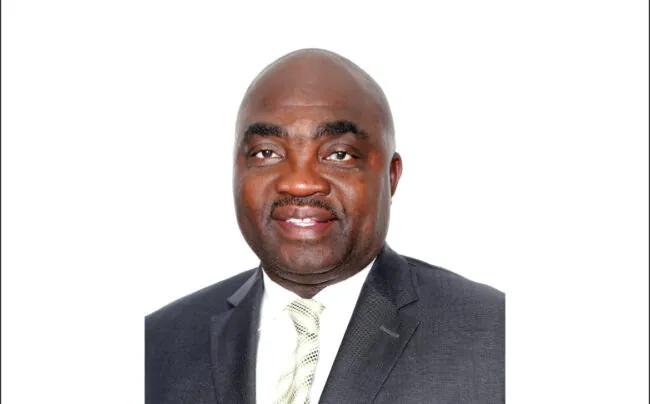
Mr Jobson Ewalefoh, the Director-General of the Infrastructure Concession Regulatory Commission (ICRC), has called for Public and Private Partnership (PPP) to boost the nation’s transport infrastructural system.
Ewelafoh made the call at the second international railway conference in Abuja on Tuesday.
According to him, only the strategic mobilisation of private capital through PPP can deliver the railway system Nigeria needs for the 21st century.
“Nigeria will require about 575 billion dollars for transport infrastructure between 2020 and 2043, making it the second-largest investment need after the energy sector, which is projected at 759 billion dollars.
“Together, both sectors form a significant portion of the country’s overall 2.3 trillion dollars infrastructure requirement. These sums cannot be raised through public funding alone.
“Our annual budgets have consistently fallen short of the100 billion dollars required to close the infrastructure gap. Without private sector involvement, rail development will remain underfunded and inadequate,” he said.
Ewehafoh said that railways was germane to reducing logistics costs, unlocking regional trade under the Africa Continental Free Trade Area (AfCFTA), and advancing Nigeria’s climate commitments.
He said that achieving these outcomes would require bold reforms to railway policy, aligning it with global shifts in urbanisation, climate change, technology, and resilience.
“Drawing lessons from India, Hong Kong, Brazil, and Europe, private-sector-led reforms — supported by clear regulation — have consistently repositioned rail as a competitive and sustainable transport mode.
“Nigeria’s standard-gauge projects (Abuja–Kaduna, Lagos–Ibadan, Warri–Itakpe) and the concessional e-ticketing system as evidence of PPP success.
“However, challenges persist in financing, freight underutilisation, and security, which threaten to undermine progress,” he said.
Ewalefoh said legal and institutional reforms, including the unbundling of the Nigerian Railway Corporation, financing innovation, such as viability gap funding, infrastructure bonds, and pension fund investments were paramount toward repositioning Nigerian railways.
According to him, others are corridor prioritisation, with focus on Lagos–Kano and Port Harcourt–Maiduguri freight routes, operational efficiency through digital technology and rolling stock leasing and integration with climate goals and urban transit systems.
“The reality is simple, transport alone will demand 575 billion dollars in the next two decades, second only to energy. Only private capital, mobilised through well-structured PPPs, can deliver this.
“The decisions we make today will determine whether rail becomes the backbone of our national transformation or remains another missed opportunity.” (NAN)