The Nigeria Customs Service (NCS) recorded N7.28 trillion in revenue in 2025, surpassing its N6.58 trillion target.
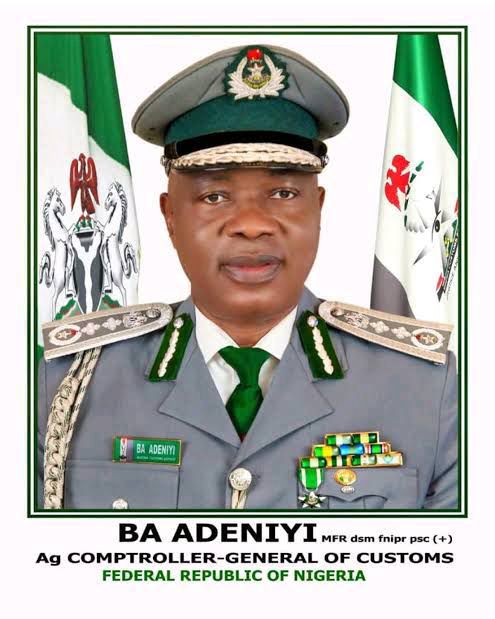
NCS’s Comptroller-General(C-G), Bashir Adeniyi, disclosed this on Monday in Abuja at the celebration of the 2026 World Customs Day themed protecting society through vigilance and commitment.
The service also unveiled the Time Release Study (TRS) conducted at the Tincan Island Port in 2024 with support from the World Customs Organisation (WCO).
Adeniyi said the revenue exceeded the 2025 target by N697 billion, representing over 10 per cent growth.
He linked the growth to reforms in the sector and the commitment of the NCS personnel in the discharge of their duties.
“Compared to 2024 collections, total revenue rose from N6.1 trillion to N7.28 trllion, an increase of approximately N1.18 trillion, or about 19 percent year on-year.
“ We present these figures not as self-congratulation, but as evidence that reform is yielding tangible outcomes.
“ The gains came not from arbitrary enforcement or the burdening of legitimate traders, but from improved compliance, better data use, digital tools, and disciplined enforcement.
“More importantly, this performance was achieved while deepening collaboration with the private sector and upholding facilitation commitments,” he said.
Adeniyi said the service recorded 2,500 seizures of prohibited and harmful goods nationwide in 2025, valued at over N59 billion.
He said the seizures cut across narcotics, counterfeit pharmaceuticals, wildlife products, arms and ammunition, petroleum products, vehicles and substandard consumer goods.
He expressed confidence that the operation prevented real harm, addiction, unsafe treatment, violent crime, subsidy exploitation, environmental degradation, treaty violations, and even loss of lives.
Adeniyi said across NCS`s Commands, its personnel worked with sister agencies to disrupt multiple criminal supply chains before they reached communities.
“At Apapa, we uncovered 16 containers of prohibited goods worth over N10 billion, a single operation that combined narcotics, expired pharmaceuticals and concealed firearms.
“At the airports, officers intercepted over 1,600 exotic birds being trafficked without CITES permits, stopping a wildlife crime operation that would have harmed both biodiversity and Nigeria’s international obligations.
“Across land borders, our teams seized illicit narcotics and counterfeit medicines worth hundreds of millions of naira, along with ammunition and other prohibited items moving through covert routes.
“These operations do not make headlines for long, but their impact is enduring as fewer young people exposed to harmful drugs; fewer weapons reaching criminal networks; fewer counterfeit medicines reaching patients; fewer endangered species removed from the ecosystem.
“This is how Customs protects society: by preventing funerals, addictions, environmental crimes and avoidable tragedies before they occur,” he said.
Unveiling the TRS, he described it as a major step towards making Nigeria’s trade gateways secure, efficient, predictable and globally competitive.
Adeniyi said that a modern customs administration must be able to detect high-risk consignments without suffocating lawful trade.
According to him, the unveiling of TRS signals NCS’s commitment to move from opinion-driven reforms to evidence-based reforms and from complaints-driven policy to data-driven policy.
He said the study at Tincan Island Port showed that Nigeria had the capacity to clear goods quickly, however, excessive idle periods resulting from fragmented scheduling, manual documentation, and poor coordination unnecessarily prolongs clearance times and erode competitiveness.
“We now have validated clearance timelines covering more than 600 declarations, combining manual timestamps and platform data.
“ We now know with precision how long it takes from booking for examination to physical gate exit, and where bottlenecks concentrate.
“ Armed with such evidence, we are now able to say: the fastest way to protect Nigerian traders and our economy is both through border security and procedural reform.
“The TRS also demonstrates another truth, customs cannot reform the ports alone. Effective trade facilitation requires terminal operators, shipping lines, partner government agencies, truckers, brokers, banks, and port authorities to work in a synchronised ecosystem rather than parallel silos.
“We Will therefore be institutionalisng the TRS as a regular diagnostic tool, not as a one-off exercise. Our intention is to monitor, to learn and to reform Continuously over future cycles,” he said.
In her keynote address, the Minister of State for Finance, Dr Doris Uzoka-Anite, described the TRS as a strategic policy instrument that enables government to measure performance and identify bottlenecks.
Uzoka-Anite said TRS also would guide in Nigeria’s determination to reduce transaction cost and enhance transparency accross its trade ecosystem.
She said that the successful implementation of the TRS would align with the Federal Government’s commitment of facilitating ease of doing business.
She added that it aimed to strengthen Nigeria competitiveness under AfCFTA and reinforces its commitment to predictable efficient trade procedures.
She assured stakeholders of reforms that strengthen institutional capacity, promote transparency and modernise border management.
“The insights generated from the TRS, will inform future policy action, infrastructure investment, and operational improvement accross our ports and border stations , “ She said.
In his goodwill message, Ian Saunders, Secretary-General of the WCO, said the TRS provides an opportunity to advance evidence-based policymaking by identifying areas for improvement and guiding appropriate strategies.