Business and Maritime West Africa editorial team x-rays the build up to Nigeria’s bid for International Maritime Organization’s (IMO) Category C Council seat: the cost, the euphoria that followed the election victory, and the challenges ahead.
Euphoria – that feeling of usually exaggerated excitement was on display by Nigerian delegates to the November 2025, IMO 2026-2027 biennium conference in London, United Kingdom. The boisterous celebration was palpable as they jumped to hug one another when the result of the election was announced and Nigeria was declared one of the victorious countries. The loud shouts of victory, screams of joy, backslapping and uncontrollable laughter were quite distinguishable from the tempered, modest celebrations of other countries that even got elected to higher decision making council seats B and A. The wild celebration also resounded in Abuja.
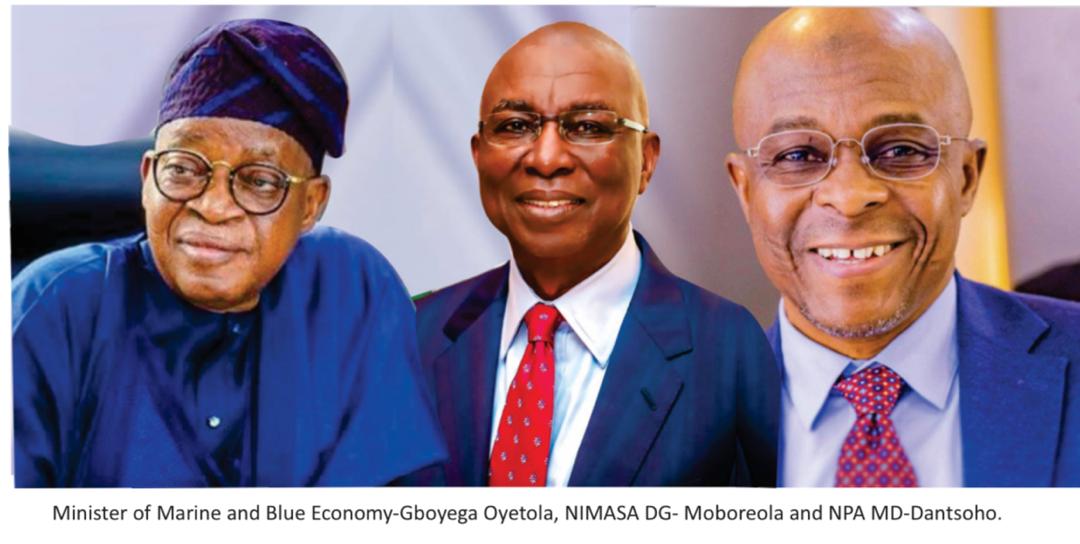
Not long after their return from London, the Minister of Marine and Blue Economy, Dr. Adegboyega Oyetola, who was also leader of the delegation, issued letters of commendation to nine members of the Inter-Ministerial Committee on Nigeria’s Re-election into Category C of the International Maritime Organization (IMO) Council, in recognition of their “outstanding contributions” to Nigeria’s victory at the IMO 2026-2027 biennium.
Those commended were the Chairman of the committee, Olufemi Oloruntola, former Permanent Secretary of the Federal Ministry of Marine and Blue Economy, alongside Babatunde Bombata, former Director of the Maritime Safety and Security Department of the Ministry, Dr Abubakar Dantsoho, Managing Director of the Nigerian Ports Authority, Dr Dayo Mobereola, Director-General of the Nigerian Maritime Administration and Safety Agency (NIMASA), Ambassador Obinna Chiedu Onowu, Director at the International Organizations Department of the Ministry of Foreign Affairs.
Others include Dr. Ade Dosunmu, former Director-General of NIMASA, Dr.Bolaji Akinola, Special Adviser to the Honourable Minister, Dr. Paschal Ogar, Assistant Director in the Maritime Safety and Security Department of the Ministry, who served as Secretary to the committee and Mr. William Balla, Nigeria’s Alternate Permanent Representative to the IMO.
The Minister expressed deep appreciation of the federal government for what he described as the commitment, professionalism and strategic coordination demonstrated by the committee members throughout the campaign process that culminated in Nigeria’s victory.
The minister commended them for “the effective campaign coordination and sustained engagement” with the IMO member states which, he said, were “pivotal to the country’s resounding victory. And noted that the efforts of the committee were critical in showcasing Nigeria’s maritime reforms, capacity and potential on the global stage, thereby strengthening the nation’s standing within the international maritime community.
Recall that the IMO Council election was held on November 28, 2025 in London, where Nigeria secured a Category C seat, ending over 14 years absence from the Council which Nigeria won for the first time under former President Olusegun Obasanjo’s administration. Since 2011, Nigeria has repeatedly failed woefully in her bid to be re-elected into the seat which has only two years duration.
This being the case, the effusive celebration that has consumed the present government officials –the ministry of marine and blue economy and its agencies officials –can be understood. Their jubilation has known no bounds and they appear to be still basking in the euphoria.
But while the celebration goes on in government circles, Nigeria’s shipping and maritime industry operators and observers are not so excited over the victory. The reason would become obvious before the end of the discourse.
From the patriotic point of view, there is reason for every Nigerian to celebrate the return to the elusive seat after a 14-year absence, having, to some extent, restored Nigeria to global reckoning among the comity of maritime nations. Truly, the prestige of Nigeria has been somewhat restored internationally. But at what cost?
The cost of the re-election
The victory Nigeria is savouring did not come cheap or follow the same pattern other countries won theirs. As the Minister of Marine and Blue Economy himself put it, Nigeria’s victory at the IMO Council election came after twelve months of sustained campaign, intensive diplomacy, targeted engagements and sustained advocacy across various countries and maritime blocs across the globe.
Certainly, these activities were conducted at great cost to the government purse and the economy. The cost of the re-election was, indeed, enormous. Apart from the cost incurred in the “targeted engagements’, campaigns and diplomatic shuttles for over one year, Nigeria was said to have gone to the IMO biennium with 68 delegates!
By comparison, Singapore, global shipping hub sent 15 delegates it normally sends, Malta, Cyprus, and Finland — strong maritime states— maintained their usual 10–15 delegates, South Africa -20 delegates, while Nigeria’s West African neighbor, Ghana, never exceeds 12-18 delegates. Even Japan and South Korea, with massive fleets, often send lean, specialized teams. But Nigeria stormed London with 68 delegates. And this is a country facing severe fiscal strain.
A 68-member delegation in London –one of the world’s most expensive cities, means that the country’s treasury had suffered severe bashing. There were flights, daily allowances of what is called ESTACOD in public service, hotels, logistics, medical coverage, security and protocol costs which must have run into hundreds of millions.
Though the government would never release the total cost of the delegation, in this day of information technology, one can easily arrive at conservative estimates: This include:
Return flights to London averaging ₦2–3 million per head,
Hotel costs of £200–£350 per night,
Daily allowances ranging from $800 to $1,200,
Transport, protocol, security and logistics.
Hence analysts estimate that the IMO trip may have cost Nigeria between ₦2billion and ₦3 billion. When the pre-election lobbying is included, the cost becomes quite staggering.
Recall that multiple foreign trips preceded the election — bilateral visits, receptions, courtesy calls to embassies, and quiet lobbying in maritime blocs from Africa to the Caribbean. Nigeria also reportedly sponsored some side events and receptions.
At least three maritime agencies reportedly ran parallel campaign budgets. It was indeed, a spending spree. As one insider bluntly said, “It was unlimited spending. The instruction was simple: Nigeria must win, whatever it takes.”
This cost is equivalent to months of funding maritime training institutions, the cost of patrol boats for coastal security, or significant infrastructure upgrades in the ports or inland waterways.
Yet this enormous cost is being defended by government officials as “strategic.” But how long will this strategy endure? Will Nigeria depend on the same strategy to win re-election in 2028?
Nigeria should not forget in the euphoria of victory that it came from a disadvantaged position. The country came from struggles with piracy in its waters and the Gulf of Guinea, port congestion, weak technical presence at IMO, maritime security concerns, and poor implementation of IMO conventions.
At the Council election, Nigeria emphasized institutional reforms, port automation, and security – messages meant to reassure delegations of Nigeria’s seriousness and reliability as a Council member. But it must be noted that European IMO members often weigh technical competence, capacity to engage effectively in working groups, and willingness to implement IMO instruments. While they seek geographic balance, they emphasize technical competence.
The fact that Nigeria secured 116 votes to beat other candidates such as Denmark, Kenya, and Bangladesh should not deceive anyone into thinking that Nigeria has arrived. It only suggests that many IMO member states viewed Nigeria’s campaign as credible and constructive. It also means that our reckless spending achieved its immediate objective.
Notably, other nations with stronger maritime reputations such as Singapore, Malta, Cyprus, Finland, etc. did not need to spend much to win the election.
How other countries limit spending and win election
Obviously, other countries campaign and win IMO Council seats without wasting money. While every IMO election involves lobbying, diplomacy, and some expenditure, top-performing maritime nations easily win seats without flamboyance, overspending, and inflated delegations.
Analysts reveal that most countries use permanent missions, not delegations during elections. Countries like Singapore, Denmark, the Netherlands, Japan, and Greece rely almost entirely on their permanent missions in London to conduct election canvassing.
They use small, highly-skilled group of diplomats to lead the campaign, while technical maritime attachés handle the IMO-specific engagements. A country like Japan relies on 5–12 delegates, mainly IMO experts already stationed in London. These countries build credibility all year –not only during elections, hence, they view large delegations as wasteful, distracting, and unnecessary.
According to IMO experts, countries that consistently win seats do so because they spend four years chairing committees, submitting technical papers, hosting side-events, sending experts to working groups, keeping strong relationships with regional blocs and contributing to IMO funds. Thus, their sustained presence becomes their campaign. They focus on technical strength –not political showmanship.
They believe that if you are active, useful, and reliable at the IMO, countries will vote for you automatically. There will be no need for expensive last-minute lobbying.
The experts further noted that in leading maritime nations, the IMO is treated as a technical regulatory body, not a political platform. Hence delegations are led by engineers, naval architects, safety experts, maritime experts and environmental specialists.
Countries such as Germany, Norway, and Canada consider a politically heavy delegation unprofessional at a technical meeting. This keeps their costs down and increases credibility. They use targeted diplomacy, not vote-buying or lavish hospitality.
On the other hand, Nigeria and some developing nations often rely on sponsoring events, hosting receptions, distributing campaign souvenirs, high spousal participation, and “visibility spending”.
Advanced maritime states like UK, Sweden, Korea and Australia avoid this kind of spending by sticking to technical cooperation agreements, quiet bilateral diplomacy, mutual support arrangements, respect for IMO’s apolitical culture etc. This way, they avoid reputational risk and their campaigns are professional and efficient.
Still on spending, many countries have strict public-spending audits. In the EU and parts of Asia, spending on UN elections is tightly regulated. Governments must justify why each delegate is necessary, what the travel adds to the campaign, and why taxpayers should fund extra personnel.
Countries like Finland, New Zealand, the Netherlands, and Belgium cannot bring up to 50 delegates because their financial regulations will not allow it. The system forces efficiency and discourages waste.
What Nigeria must do to win re-election
How can Nigeria remain in the Category C of the IMO Council, and even move up to Category B and A? It is one thing to win a contest and be a champion, and another thing to remain a champion. Will Nigeria in subsequent elections depend on the size of its budget, expensive diplomatic shuttles, hosting and organizing parties for diplomats, and expensive campaigns to remain on the seat?
Certainly, the pyric victory at IMO cannot be sustained this way. As Minister Oyetola noted, “We have earned the world’s confidence. Now we must deepen our reforms, strengthen our institutions and ensure that Nigeria takes its rightful place as a leading maritime nation.” Well said.
But since returning from the election, has the minister directed the agencies to ensure that the IMO Audit checklist is worked on? What has been done to get to the root of maritime insecurity issues that increase the cost of shipping to Nigeria, that make foreign ship owners and insurers insist on War Risk Insurance and other charges on Nigeria-bound ships? What about the lingering security and safety challenges along Nigerian water channels responsible for rising cost of local shipping? What is being done to see that Nigeria participates in international shipping beyond lip-service?
Maritime analysts contend that Nigeria will remain in IMO Council by: Strengthening maritime security, enhancing port efficiency, meeting IMO safety and environmental commitments, and providing real leadership within the Africa Group.
In addition, as a Nigerian maritime scholar noted, Nigeria must learn from other countries, and:
1. Strengthen the Nigerian Mission in London. A strong IMO-specialized mission reduces the need for large delegations.
2. Invest in year-round technical contributions –submit papers, attend working groups, host events, and not just campaign every two years.
3. Professionalize the delegation structure, by keeping it small, technical, year-round and avoiding political delegations.
4. Establish spending guidelines. Cap the size of election delegations; demand justification for each traveler.
5. Focus on credibility, not visibility, as real authority at IMO is built through expertise, not crowd size.
Conclusion
Now that the euphoria has died down, it’s important to reiterate that countries that succeed at the IMO without overspending do so because they rely on diplomats already in London, and work consistently, not seasonally. They prioritize technical leadership, real maritime sector development, shipping infrastructure and capacity building, measurable and sustainable growth and limit political interference. Above all, they enforce strong financial discipline.
If Nigeria can do all this, it can remain a global maritime voice—without the reputational and financial costs that marked its recent re-election bid.