An oil and gas expert, Prof. Wumi Iledare, has said that weak regulatory enforcement is behind the uncontrolled gas flaring going on in Nigeria.
Iledare urged the Federal Government to tighten regulatory enforcement in accelerating the development of reliable gas infrastructure, critical to ending routine gas flaring in the country.
Iledare told the News Agency of Nigeria (NAN) in Lagos on Tuesday that the nation’s persistent gas flaring problem was no longer about the absence of policy frameworks but the weak implementation of existing regulations.
Professor Emeritus of Petroleum Economics and Policy Research, Louisiana State University Centre for Energy Studies, U.S., said enforcement must begin with flaring penalties that are economically meaningful rather than symbolic.
“Flaring fees should consistently exceed the cost of gas capture, taking into account inflation and fluctuations in gas prices,” Iledare said.
He added that regulatory exemptions must be clearly defined, strictly time-bound and transparently disclosed to prevent abuse.
Iledare also called for the deployment of real-time monitoring technologies, including metering systems, satellite verification and automated reporting, to close the gap between reported and actual flaring volumes.
“Enforcement must be consistent and impartial. Operators are more likely to comply when consequences are seen as inevitable,” Iledare said.
The expert acknowledged that inadequate infrastructure and limited access to finance remain major barriers to gas capture, noting that routine flaring persists largely due to the absence or high cost of gas evacuation options.
He advocated a blended approach in which government facilitates shared infrastructure such as pipelines and processing hubs, while the private sector drives efficiency and innovation.
“Fiscal incentives must be complemented with access to blended finance, including development, climate and commercial funds, to reduce investment risk,” he said, stressing that policy consistency was essential to attracting long-term investment.
Iledare said Nigeria’s energy transition would only succeed if it aligns with domestic economic priorities, adding that reducing gas flaring should directly support gas-to-power projects, the expansion of CNG and LPG infrastructure and increased industrial gas utilisation.
According to him, the objectives of Nigeria’s “Decade of Gas” initiative and its climate commitments are complementary, with natural gas serving as a credible transition fuel.
“By directing captured gas to power generation, industry and transportation, reductions in flaring can translate into job creation, improved energy access, enhanced social welfare and lower emissions,” he said.
Reacting to the vision of the Nigerian Upstream Petroleum Regulatory Commission (NUPRC) Chairman on production optimisation, revenue expansion and regulatory predictability, Iledare welcomed the aspirations but cautioned against conflating outcomes with regulatory mandates.
“These are desirable outcomes, but they are not the regulator’s primary responsibility.
“Regulators enable value creation; they do not directly deliver barrels or revenues,” he said.
He explained that the Petroleum Industry Act (PIA) envisages sustainable production growth and revenue expansion as outcomes of transparent, predictable and rule-based regulation.
While commending initiatives such as service-level agreements, digital workflows and faster approvals, Iledare said their effectiveness would depend on being firmly anchored in clear regulatory instruments, institutional discipline and PIA-compliant processes.
“Ultimately, durable investor confidence and sector efficiency will be achieved through regulatory specificity, rules over discretion, predictability over speed, and institutions over personalities,” he said.
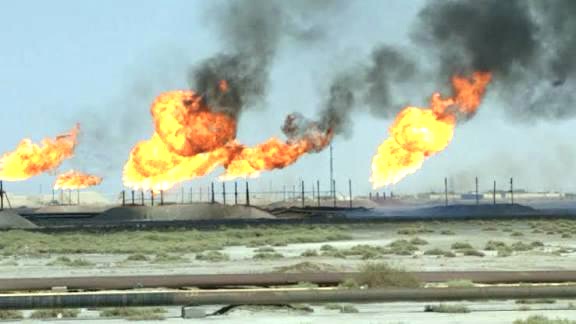
Gas flaring is the controlled burning of natural gas, often associated with oil extraction, that can’t be used or transported, releasing greenhouse gases and pollutants like CO2, soot, and VOCs, causing climate and health issues (respiratory problems, cancer risk) due to lack of infrastructure, market issues, or regulations, despite efforts like World Bank’s Zero Routine Flaring Initiative to end it by 2030.
Environmental & health impacts
Climate Change: Releases potent greenhouse gases like methane (CH4), nitrous oxide (N2O), and carbon dioxide (CO2).
Air Pollution: Emits black soot (particulate matter), volatile organic compounds (VOCs), and other contaminants.
Health Issues: Linked to respiratory illnesses (asthma), infections, and potential long-term ailments like cancer in nearby communities.
Waste of Resources: Burns a valuable energy source that could be used for power generation.