BMWA Editorial
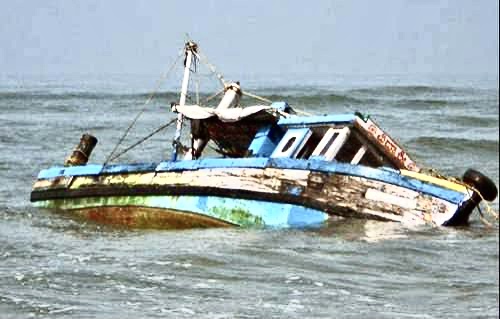
As Nigeria witnessed another round of fatal boat accidents on its inland waterways in this year, the federal government announced that it has approved N14.6 billion for the procurement of modern boats for operators in riverine communities. At first glance, this appears to be a step in the right direction.
Nonetheless, without transparency, accountability, and a clear safety framework, this intervention risks becoming yet another well-funded gesture that fails to address the root causes of the crisis—or worse, descends into political patronage.This is more so as the election year is fast approaching.
For years, stakeholders have identified the core drivers of these tragedies: overloading, lack of life jackets, untrained operators, night travel without navigational aids, and weak enforcement by regulators, especially the National Inland Waterways Authority (NIWA). These are not problems that can be solved merely by introducing new boats, however modern they may be.
Indeed, the danger lies in mistaking equipment for reform. If the distribution of these boats follows the all-too-familiar pattern of political favoritism—awarded to loyalists, party members, cronies, or unqualified beneficiaries—then the outcome is predictable. Boats may change, but behavior will not. Safety violations will persist, maintenance will be neglected, and the waterways will remain as hazardous as ever.
This is why the N14.6 billion intervention must be anchored on strict, enforceable conditions.
First, beneficiary selection must be transparent, merit-based, and verifiable. Only licensed, trained, and safety-compliant operators should qualify. The days of handing over public assets as political rewards must end—especially when human lives are at stake.
Second, the boats themselves must meet standardized safety specifications, including mandatory life jackets, communication equipment, and navigational aids. Procurement should not be shrouded in secrecy. Nigerians deserve to know what is being purchased, at what cost, and from whom.
Third, this initiative must be integrated into a broader safety reform agenda. Without strengthening enforcement, even the most sophisticated boats will be misused. NIWA and relevant state authorities must be empowered—and compelled—to ensure compliance with safety regulations, with zero tolerance for violations.Enough of identifying the problems, saying the right things and not doing them.
Fourth, there must be a robust monitoring and evaluation mechanism. Who is using these boats? Are they being maintained? Are they adhering to safety protocols? These questions must be answered continuously, not retrospectively after another tragedy.
Fifth, community engagement is critical. Riverine populations must not see this as a government handout but as a shared responsibility. Operators and passengers alike must be sensitized to prioritize safety over convenience or profit.
Nigeria has seen too many well-intentioned interventions reduced to mere optics—lavish launch ceremonies followed by operational silence. The waterways cannot be a place for political gimmicks or experiment. The cost of failure is measured not in naira, but in human lives.
If properly implemented, this N14.6 billion initiative could mark a turning point in inland water transport safety. And will help in encouraging state governments to do the same. But if mismanaged, it will only deepen public cynicism and, tragically, add to the death count.
The government must choose: will these boats become instruments of safety and reform, or symbols of waste and patronage?
The answer will not be found in the procurement—but in the process, the people, and the principles that guide it.