The Nigerian Society of Engineers (NSE) has reiterated that the nation possesses vast marine resources that are underutilised due to a weak technological deployment.
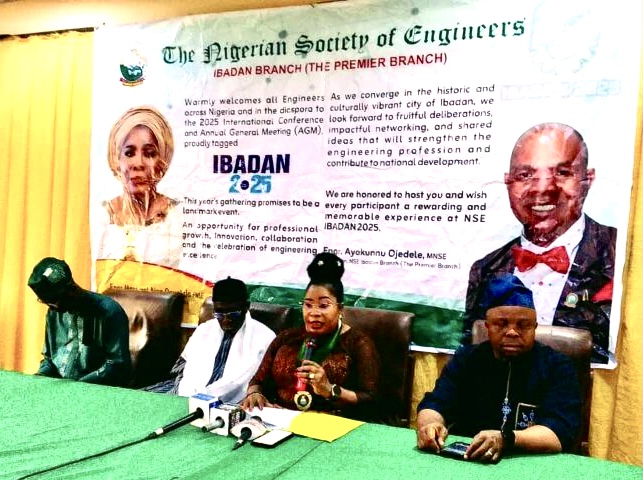
This, among others, was observed in a communique issued in Ibadan at the end of the 2025 NSE International Conference and Annual General Meeting (AGM) on Friday.
The communique, arising from the meeting which started on Monday, was signed by NSE President and Chairman‑in‑Council, Mrs Margaret Oguntala.
The body of engineers said the maritime sector also lacked adequate port infrastructure, shipyards, navigational systems, and shoreline protection facilities, hindering it from capturing opportunities of its blue economy.
It also decried growing environmental threats, such as coastal erosion, flooding, pollution from industrial effluents, oil spills, and unmanaged waste.
This, it said, had continued to degrade marine ecosystems and endanger livelihoods, remaining a persistent threat due to limited modern coastal defence engineering solutions.
It also raised concerns about the challenges of uncertainty facing private investors in Nigeria, due to inconsistent policy direction and inadequate risk-mitigation incentives.
NSE, however, noted that the Nigerian government had demonstrated a strong commitment to the marine and blue economy sector by creating the Federal Ministry of Marine and Blue Economy.
It, however, said the necessary policy frameworks had remained fragmented across the ministry’s agencies.
“With a coastline of over 850 km and vast marine resources, Nigeria has immense potential to grow non-oil sectors like fisheries, aquaculture, coastal tourism, marine biotechnology, and renewable ocean energy.
“Engineering-driven entrepreneurship in the Nigerian blue-economy sector, such as shipbuilding, marine logistics, and ocean energy, has also remained nascent due to limited incubation and innovation ecosystems.
“Most Nigerian engineers lack access to funding, innovation labs, and market pathways for developing blue-economy solutions.
“The blue-economy sector presents significant investment potential, but funding mechanisms remain inadequate and poorly structured for large-scale marine engineering projects.
“Local content development in maritime engineering and related industries has also remained low in Nigeria, in addition to other issues,” it said.
The conference recommends that the government develop an integrated National Blue Economy Policy Framework to harmonise the roles of all Ministries, Departments, and Agencies (MDAs).
It called for government and private-sector collaboration, modernisation and expansion of ports, jetties, and coastal transport infrastructure, and the adoption of global engineering best practices.
“Also, the government should promote university–industry clusters that support prototype development, patenting, and commercialisation in blue-economy sectors,” it said.
It highlighted the need for the government to strengthen the enforcement of maritime laws and regulations to guard against illegal maritime activities and environmental degradation.
The body reports the emergence of a new National Executive Committee through online voting to run its affairs in 2026.
While Ali Alimasuya Rabiu was voted as the President, Valerie Agberagba came in as the Deputy President, alongside other newly elected officers. (NAN)