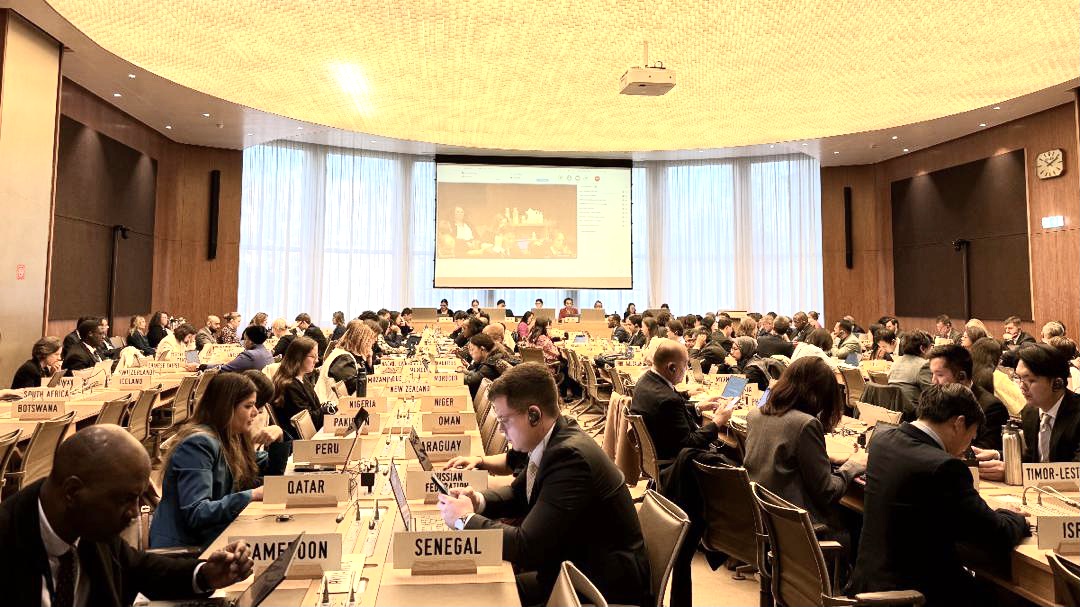
Members of the World Trade Organisation (WTO) Committee on Technical Barriers to Trade (TBT) met from 3 to 6 March 2026, dedicating a full day to discussing how coherent testing helps build market access for enterprises as well as consumer confidence. They also discussed 70 trade concerns, 18 of which were raised for the first time.
Conformity assessment procedures
On 3 March, four thematic sessions were held to mark two years of the Committee’s adoption of guidelines on conformity assessment procedures (CAP).
In a session focusing on the role of national quality infrastructure (NQI) in regulatory systems, speakers explored the role of standardization, metrology, testing, accreditation and certification in enabling international trade, highlighting the importance of domestic coordination. They identified limited financing, shortage of specialized human resources and a fragmented institutional framework as challenges faced by developing members for establishing NQI. Speakers also emphasized the role of the Committee’s 2024 CAP Guidelines in supporting members as they enhance their NQI.
In a session on risk assessment and the use of first-party conformity assessment for lower-risk products, speakers discussed the benefits of using first-party conformity assessments. Under these, regulators can allow companies to declare that they meet applicable specifications, such as quality or safety requirements. This, speakers said, can be a cost-saving and efficient tool to achieve legitimate policy objectives, while facilitating market access. The session also highlighted that an effective system of market surveillance and an appropriate product liability framework can complement this tool.
In a third thematic session, speakers discussed practical approaches to designing and applying risk assessment methodologies for market surveillance. They highlighted the importance of structured, data-driven targeting, pre- and post-market controls, and effective coordination across authorities. The session also examined challenges to e-commerce participation and pointed to digital tools and cross-agency cooperation as important means of strengthening market surveillance.
In a session on mutual recognition arrangements (MRAs) across different sectors, speakers from member economies, multilateral organizations and businesses noted the benefits of MRAs to facilitate trade in goods, diversify trade, and reduce costs and time for businesses and regulators, while maintaining members’ autonomy to regulate. Transparency, ensuring strong business awareness, building technical capacity and effectively using MRAs were some of the challenges mentioned, particularly for developing economies. The importance of NQI – in particular, accreditation – was stressed as an essential enabler for negotiating, adopting and maintaining MRAs.
Recordings and background information on each session can be found here.
A factsheet by the WTO Secretariat on the CAP Guidelines is available here. An explainer about conformity assessment and why it matters for trade can be found here.
Specific trade concerns
Japan and the United States reported progress on a specific trade concern with China regarding hazardous substance standards in electrical and electronic products. The United States said it welcomes the withdrawal by Spain of a draft decree on the labelling of consumer products, as well as the rescission of quality control orders for certain chemicals by India. The United States also reported the resolution of a trade concern with Malaysia on alcoholic beverages.
The list of the 70 trade concerns members raised on proposed and final TBT regulations is available here.
The 18 new trade concerns addressed a wide variety of regulatory issues related to cybersecurity and cybercrime, pharmaceuticals, digital tax stamps, tyres, energy efficiency, food traceability, nutritional labelling, alcoholic beverages, energy drinks and tobacco products, among others.
Annual review
Every year, the TBT Committee carries out an annual review of activities relating to the implementation and operation of the TBT Agreement, including notifications, specific trade concerns, technical assistance activities and TBT-related disputes. Among the key takeaways from the 2025 Annual Review of the TBT Committee were the following:
In 2025, the Committee strengthened its role as the global forum for dialogue on emerging regulatory issues related to TBT. Among other work, the Committee held eight thematic sessions, including on decarbonization, critical and emerging technologies (including artificial intelligence – AI – and semiconductors), medical devices and traceability for agricultural commodities.
The Committee adopted two decisions to improve notification practices. The Transparency Working Group further facilitated the preparation and tracking of notifications. Member submitted a record 5,206 notifications of new or changed measures, constituting 55 per cent of all notifications to the WTO. A total of 17 African members submitted 46 per cent of all TBT notifications, with Burundi, Kenya, Rwanda, Tanzania and Uganda among the top ten notifiers.
The Committed acted as a forum for members to address specific trade concerns (STCs), often early in the regulatory process. Of the 40 new STCs, 60 per cent originated from developing members.