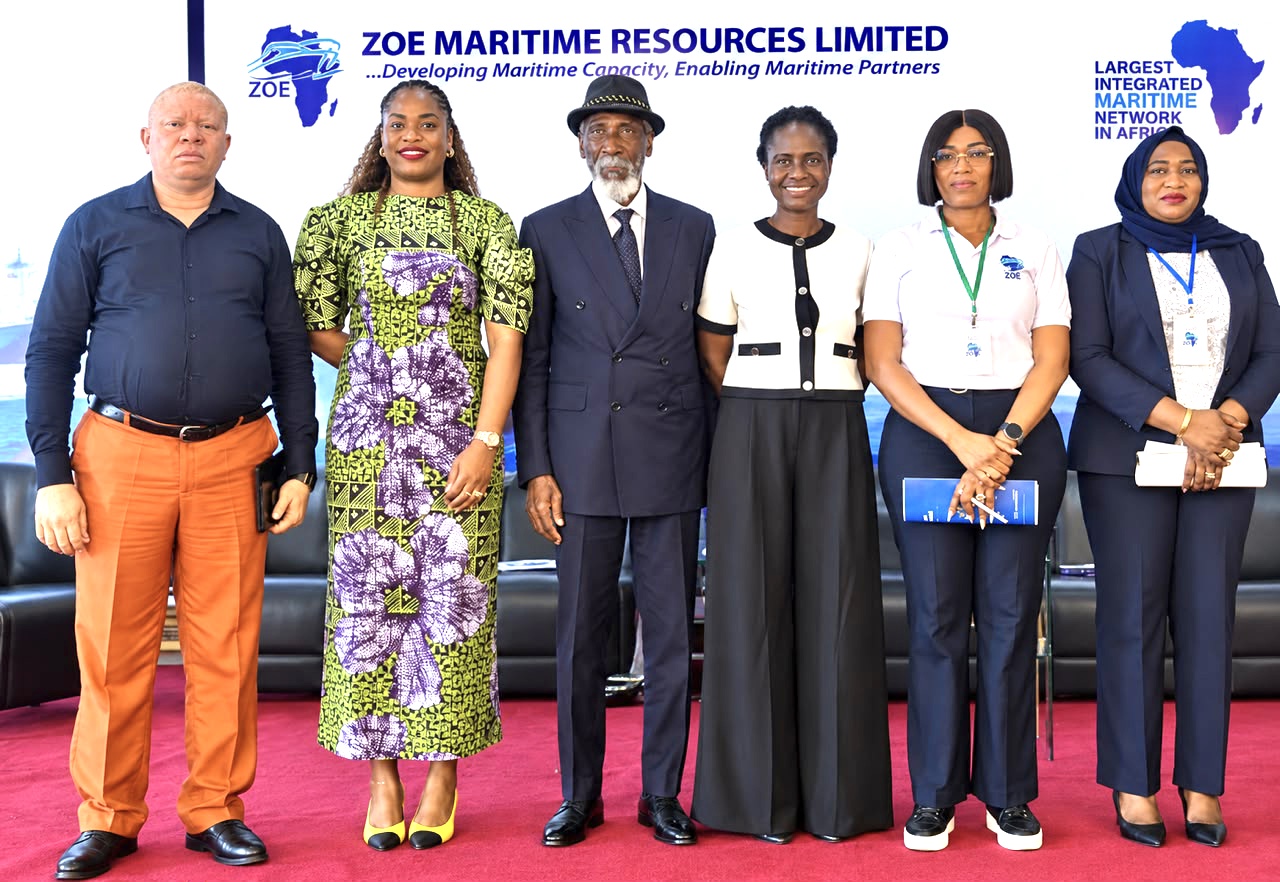
Stakeholders at the 2026 Lagos Maritime Week roundtable have called for urgent Cabotage Vessel Financing Fund (CVFF) disbursement and stronger collaboration to accelerate Nigeria’s maritime development.
They made the call on Tuesday while examining gaps between maritime policies and their implementation across West and Central Africa.
Ms Iroghama Ogbeifun, Managing Director, Starz Investment Company Ltd., urged government to expedite disbursement of the Cabotage Vessel Financing Fund.
Ogbeifun, also a Board Member of the Nigeria Maritime Administration and Safety Agency (NIMASA), said policy without implementation remained ineffective.
“Policy without practice remains a document,” she said, stressing the need for policies capable of transforming Nigeria’s maritime industry.
She said accessing the CVFF would enable Nigerian operators to acquire vessels, reduce dependence on foreign ships and expand domestic shipping.
Ogbeifun said delays in accessing the fund continued to constrain growth, competitiveness and job creation within the maritime sector.
She disclosed that 20 of 92 CVFF applications had reached the bank for processing, urging speedy approval to unlock funding.
According to her, faster disbursement would strengthen indigenous ship ownership and increase Nigerian participation in domestic shipping.
Ogbeifun also identified human capacity as a major challenge, questioning whether adequate trainers, equipment and curricula existed to support maritime innovation.
She urged collaborative training between Nigerian operators and foreign partners to develop seafarers, engineers and shipyard technicians.
Ogbeifun said companies should invest in workers rather than poaching trained personnel from competitors, while government should strengthen cadetship programmes.
Capt. Niyi Labinjo, moderator of the session, urged stakeholders to move discussions beyond rhetoric and focus on actionable maritime solutions.
Labinjo said policies would continue to “gather dust” without sustained collaboration among regulators, operators and regional maritime organisations.
He called for regular platforms beyond annual maritime events to sustain dialogue and ensure continuous feedback between regulators and operators.
Mrs Tokunbo Jakande, NIMASA’s Head of Shipping Operations, identified fragmented governance and weak data-sharing systems among major operational challenges.
She said innovation should follow policy direction, stressing that Nigeria’s maritime future depended on quality services supported by automation.
Jakande explained that NIMASA’s command, control, communication and computer systems monitor vessel movements and provide real-time compliance information.
She said regulators must convert maritime domain-awareness data into actionable intelligence without creating additional bureaucratic delays.
Ms Olimotou Malang, Director-General, Gambia Maritime Authority, said capacity building must precede digitalisation for technology investments to produce sustainable results.
“Technology without skilled people cannot deliver results,” Malang said, stressing the need for modern maritime training across Africa.
She advocated a single maritime window for West and Central Africa under the Maritime Organisation for West and Central Africa (MOWCA).
Malang said language barriers and individual national efforts were hindering regional integration, although MOWCA was working toward a regional solution.
Dr Kingsley Igwe, Registrar, Council for the Regulation of Freight Forwarding in Nigeria (CRFFN), warned against excessive dependence on digital systems.
Igwe, represented by CRFFN Director, Mr Peter Akunubi, said manual alternatives remained necessary during transition and periods of system downtime.
He said CRFFN was training freight forwarders and issuing certificates in manual inventory procedures to ensure operational continuity.
Igwe called for a single database among agencies to eliminate repeated information requests, improve data security and strengthen accountability.
The stakeholders resolved that regional cooperation, capacity development and sustained public-private dialogue were critical to moving maritime policies from paper to practice. (NAN)