By Okey IBEKE
For decades, the Nigeria Customs Service was largely associated with physical cargo examination, revenue collection, seizures, border enforcement and the paperwork that accompanied international trade. But that model is changing.
The transformation taking place within the Nigeria Customs Service is not simply about replacing files with computers or manual procedures with digital platforms. It is increasingly about changing how the institution operates, how its officers make decisions and how Nigeria manages its position within an evolving global and African trading environment.
At the centre of this transformation are three closely connected elements: modernisation, human-capital development and digital innovation.
The emergence of B’Odogwu, the Nigeria Customs Service’s indigenous Unified Customs Management System, is perhaps the most visible expression of the change. But the more important story lies behind the technology — in the effort to equip Customs personnel with the skills required to operate in an environment increasingly driven by data, risk management, intelligence and automation.
This is particularly relevant to President Bola Tinubu’s Renewed Hope economic agenda, which places emphasis on expanding production, improving the business environment, increasing non-oil exports and enabling Nigeria to take greater advantage of the African Continental Free Trade Area.
Customs sits at the intersection of many of these objectives. It collects revenue, protects the economy against prohibited and dangerous goods, combats smuggling and commercial fraud, facilitates legitimate trade and plays an increasingly important role in supporting Nigeria’s participation in international and continental markets.
The effectiveness of these responsibilities ultimately depends on the people discharging them.
For much of its history, Customs operations depended heavily on paperwork, physical inspection and the individual experience of officers. But international trade has become considerably more complex. Supply chains are more sophisticated, trade documentation is increasingly digital, and attempts to evade duties and border controls have become more difficult to detect through conventional methods alone.
The modern Customs officer therefore requires a broader range of competencies. Knowledge of tariffs and import procedures must increasingly be complemented by expertise in risk management, valuation, classification, post-clearance audit, data analysis, intelligence gathering and digital systems.
This makes human-capital development one of the most important components of Customs reform. Technology can process information, but officers must understand what that information means and determine what action is appropriate. A risk-management system, for example, may flag a transaction, but it is the officer’s professional judgment that determines whether the consignment requires intervention.
That is changing the meaning of productivity within Customs. The most effective officer is not necessarily the one who examines the greatest number of containers. It is the officer who can identify the consignments that genuinely require examination while allowing compliant cargo to move with minimum intervention.
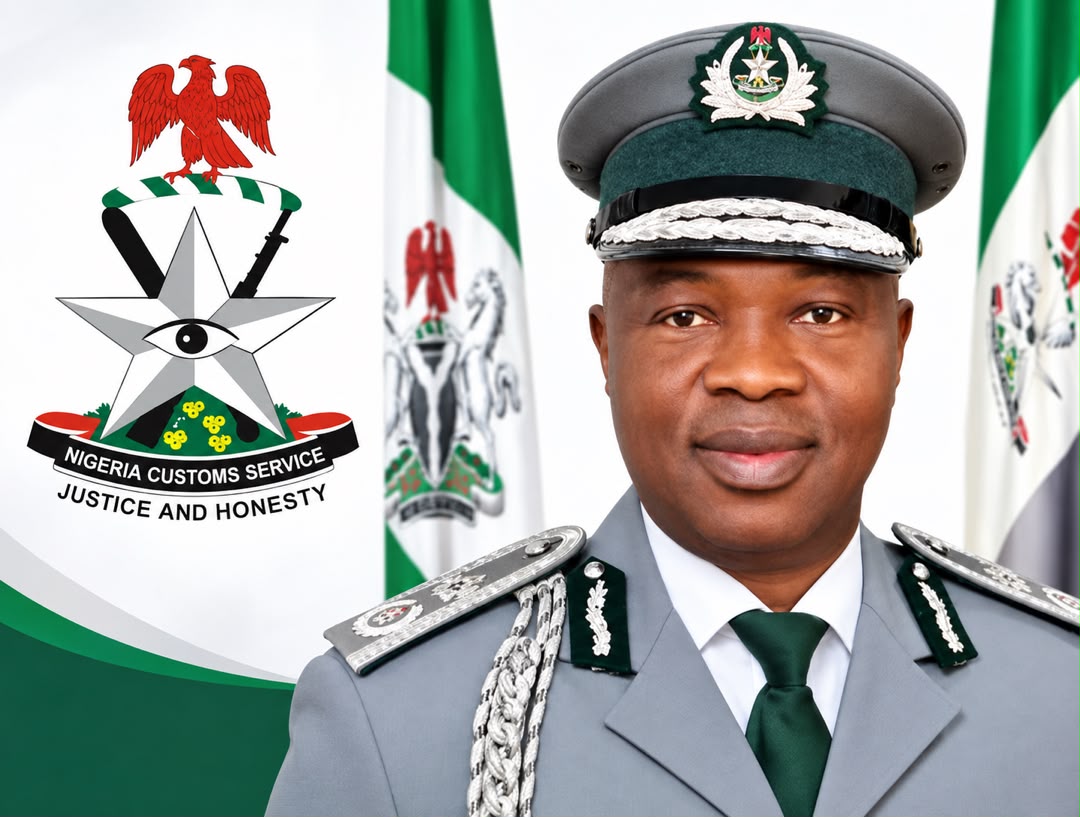
Modernisation, therefore, should enable Customs personnel to work smarter, more selectively and more efficiently, rather than simply process more transactions. This is where the reforms under Comptroller-General of Customs Adewale Adeniyi become relevant.
Since assuming office, Adeniyi has accelerated efforts around technology deployment, trade facilitation, institutional collaboration, professional development and intelligence-led enforcement. The broader direction has been to make Customs less dependent on physical processes and more capable of using information before, during and after the clearance of goods.
Post-clearance audit provides a good example. Instead of attempting to resolve every issue at the point of entry, properly trained officers can allow compliant cargo to move while subsequently examining the trader’s records and transactions to determine whether the correct duties were paid.
That approach can improve both trade facilitation and revenue assurance, but it demands officers with stronger analytical and professional skills. The same applies to risk management. Rather than treating every consignment as equally suspicious, Customs can increasingly use information and historical transaction patterns to determine where enforcement resources should be concentrated.
This is where technology and human expertise complement each other. The investment in personnel development has therefore become as important as the investment in digital infrastructure. The Service has expanded specialised training in areas including risk management, post-clearance audit, valuation, classification, intelligence and leadership, while thousands of officers have undergone training associated with its modernisation programme.
The objective is not simply to teach officers how to operate new systems. It is to prepare them for a different model of Customs administration. That change becomes even more significant when viewed through the lens of AfCFTA.
The African Continental Free Trade Area is often discussed in terms of tariff reductions and the size of the continental market. But preferential access alone will not make African trade competitive. Traders also need efficient documentation, predictable border procedures, reliable certification and digital systems capable of communicating with one another.
This is where Nigeria’s Customs modernisation acquires a continental dimension. B’Odogwu is important not merely because it digitises Customs processes in Nigeria, but because it provides a platform through which the country can increasingly participate in the emerging digital architecture of African trade.
For AfCFTA to work effectively, African Customs administrations must move towards greater interoperability. Systems need to be capable of exchanging information, authenticating trade documents and supporting secure, efficient movement of goods across borders. Nigeria’s investment in B’Odogwu and related digital trade initiatives is therefore part of that broader transition. It also has direct implications for the Renewed Hope agenda.
If Nigeria wants to increase non-oil exports, it must make it easier and less costly for businesses to move their products into international markets. Producing a competitive product is only part of the equation; the product must also reach its destination efficiently. For Nigerian businesses seeking to exploit AfCFTA, cumbersome documentation and border procedures can undermine the commercial advantage created by tariff preferences. A more efficient digital Customs environment can help reduce those transaction costs.
The Customs Service has consequently pursued digitalised export processes and other measures designed to support Nigeria’s participation in continental trade. The significance of these initiatives lies in their potential to connect Nigeria’s domestic Customs processes with the wider digital trade ecosystem emerging around AfCFTA.
B’Odogwu should therefore be seen as one component of a much larger journey. It is not AfCFTA itself, nor can a single Customs platform resolve the structural challenges facing African trade. But it provides an important technological foundation for a more integrated and digitally enabled Customs environment.
The National Single Window initiative points in the same direction by seeking greater integration among government agencies and trade processes.
The long-term objective is a system in which traders can complete more of their regulatory requirements through interconnected platforms rather than navigating multiple, disconnected government processes. Such a transformation would represent a significant departure from the traditional way of doing business.
But the transition was without challenges. The implementation of B’Odogwu generated concerns among some freight forwarders, Customs agents and other stakeholders over aspects of system migration and operational procedures. These concerns underline an important point: digital transformation is not achieved by installing software alone.
The systems have to work for the people using them. Customs officers must understand them. Traders and agents must adapt to them. Relevant government agencies must be connected to them. And Customs management has remained responsive and that’s why most of the observed challenges have been addressed.
This is why Adeniyi’s several engagements with stakeholders has been relevant to the reform process as modernization requires continuous adjustment, feedback and institutional learning.
Ultimately, the question is whether the reforms are producing better operational outcomes. That is where human capital becomes decisive.
A digital platform can make information available, but it cannot replace professional judgment. Scanners can identify anomalies, but trained officers must investigate them. Risk-management systems can highlight unusual transactions, but personnel must determine whether they represent legitimate commerce or an attempt to evade the law.
The transformation of Customs is consequently as much about changing the quality of personnel as it is about changing the technology they use. This is perhaps one of the most important aspects of the current reform process.
A Customs officer operating in a modern trading environment must increasingly be able to work with data rather than simply documents; analyse risk rather than rely exclusively on physical inspection; understand trade facilitation alongside enforcement; and appreciate how Nigeria’s Customs procedures fit into the wider framework of international and African trade.
That requires sustained investment in training. It also requires the institutionalisation of reforms so that progress is not dependent solely on the tenure or personality of an individual leader.
Adeniyi’s tenure has been marked with an accelerated push towards digitalisation, professional development, collaboration and international engagement. His contribution is therefore an important part of the current transformation. But the greater objective should be to embed these reforms permanently within the institution.
Nigeria needs a Customs Service that can consistently collect legitimate revenue, protect national security, facilitate lawful commerce and support exporters regardless of who occupies the office of Comptroller-General. That institutional capacity will become even more important as AfCFTA develops.
Nigeria has the market, entrepreneurial capacity and productive base to become one of the major beneficiaries of continental trade. But those advantages can only be fully exploited if the institutions governing the movement of goods are capable of matching the demands of a modern trading environment.
Customs is one of those institutions. Its modernisation should therefore be understood as part of a much wider economic transformation — one that connects revenue mobilisation and border security with trade facilitation, export development and Nigeria’s participation in the digital future of African commerce.
The ultimate measure of the reform will not be how many computers have been installed, how sophisticated B’Odogwu becomes or how many digital transactions are processed. It will be whether Customs officers can use those tools to make better decisions: identifying genuine risks, protecting government revenue, facilitating compliant trade and disrupting sophisticated attempts to exploit Nigeria’s borders.
If that happens, modernisation will have achieved more than digitalizing Customs. It will have strengthened the institution’s capacity to support the Nigerian economy. And with B’Odogwu providing an indigenous digital foundation, Nigeria has an opportunity to move beyond simply being a participant in AfCFTA and become an active contributor to the digital systems and processes that will determine how effectively African countries trade with one another.
That is the broader significance of the Customs transformation — not technology for its own sake, but technology, people and institutional capacity working together to make Nigeria more competitive in the emerging African trading environment and that’s what Customs under the leadership of Adeniyi is striving to achieve.