
For more than a decade, Nigeria’s port industry has operated with an uncomfortable regulatory contradiction. Following the port concession and port reforms, the need for proper port regulation became more germane. Unfortunately, the port reforms were carried out without an enabling legislation, thereby making the port system an unregulated area.
As operators decried the situation, the government appointed the Nigerian Shippers Council the economic regulator of the ports. Again, the assigned responsibility did not come with the benefit of a dedicated Act of the National Assembly.
The Nigerian Shippers Council was designated the interim economic regulator of Nigeria’s ports in 2014. The responsibility was further reinforced through the Nigerian Shippers’ Council (Port Economic Regulator) Order and the Port Economic Regulations of 2015.
Under that arrangement, the Council was expected to perform functions that are fundamental to any modern port system: provide guidelines for tariff setting, prevent arbitrary charges, monitor service standards, promote competition, prevent abuse of dominant market positions, facilitate dispute resolution and ensure compliance with concession agreements.
But the problem was that the assigned responsibilities had no legal foundation and the regulatory architecture was not as strong as the responsibility placed upon the Council.
This created a fertile ground for disputes: shipping companies and terminal operators could, and sometimes did, question the legal basis of regulatory interventions by the Council. Whenever the Council attempted to control charges, challenge questionable practices or impose regulatory discipline, the debate would quickly move from the substance of the issue to the more fundamental question of whether the Council actually possessed the legal authority to do what it was attempting.
The situation was, indeed, unhealthy for everybody. It was unhealthy for the regulator because its authority was being challenged. It was unhealthy for terminal operators and shipping companies because regulatory uncertainty makes investment and business planning more difficult.
And, most importantly, it was unhealthy for Nigerian shippers and cargo owners who remained exposed to high and sometimes unpredictable costs of doing business at the ports.
The Coming of NPERA
With the signing of the Nigerian Ports Economic Regulatory Agency Act, 2026, into law by President Bola Ahmed Tinubu, the long-awaited statutory framework for economic regulation of Nigeria’s ports has finally arrived. The Nigerian Shippers Council has consequently transitioned into the Nigeria Ports Economic Regulatory Agency (NPERA), with a broader and clearer mandate to regulate the economic activities of the nation’s ports.
The development is significant, not merely because a new agency has been created, but because it potentially brings to an end, years of uncertainty over who has the authority to regulate the commercial relationships, tariffs, charges, competition and service standards that define the Nigerian port business. It brings to an end the appellation of the Council as a toothless bulldog.
But the signing of the Act should not be mistaken for the completion of port reform. As a matter of fact, the real work has started.
The era of regulatory ambiguity has ended as the NPERA now has the statutory backing to regulate port tariffs and charges, licensing, service standards, fair competition and commercial disputes, among other responsibilities.
This means that the conversation should no longer be about whether there is a regulator. The question now is whether that regulator will have the courage, competence and independence to regulate effectively.
Nigeria does not need another regulatory institution that merely issues circulars, convenes meetings and appeals to stakeholders to behave responsibly.
The Nigerian port system needs an economic regulator that regulates. That means scrutinizing tariffs and charges with the seriousness they deserve. It means questioning charges that cannot be justified by corresponding services. It means preventing monopoly and abuse of dominant market positions. It means establishing predictable rules for operators and users alike. It means enforcing service standards and ensuring that commercial disputes do not become prolonged battles that ultimately impose additional costs on cargo owners.
The economic regulator must also be prepared to protect legitimate investment.
Indeed, good economic regulation is what makes serious investment possible.
Terminal operators, shipping lines and other private-sector players require a predictable environment in which they know the rules, understand how tariffs are determined and can plan investments without arbitrary government intervention.
On the other hand, the users of the ports equally require protection from excessive charges, poor services and market practices that take advantage of the absence of effective competition.
The job of NPERA, therefore, is not to punish operators, but to balance the market. Regulation must be based on evidence, not sentiments.
Experts have said that one of the biggest tests before NPERA will be tariff regulation. Nigeria’s port users have for years complained about the multiplicity and high cost of charges associated with cargo movement. Shipping charges, terminal charges, storage charges, documentation fees and other costs have often accumulated into a significant burden on importers and exporters.
The regulator must therefore develop a transparent and evidence-based framework for determining what constitutes a reasonable charge.
Every tariff should have an economic justification, just as every increase should be explainable. Every regulated service should have an identifiable standard.
And where an operator claims that a higher charge is necessary because of increased operating costs or investment requirements, the regulator should have the technical capacity to examine those claims rather than simply accept them for peace to reign. This is what economic regulation means.
It is not about fixing prices arbitrarily. It is about ensuring that prices and charges reflect legitimate costs, reasonable returns, market conditions and the quality of services provided.
The new regulator must also regulate service quality. For too long, the Nigerian port debate has concentrated heavily on charges while paying insufficient attention to the quality and efficiency of services for which those charges are imposed. The question should not only be how much a port user pays, but also the service the port user is paying for.
If terminal charges increase, service quality should improve. If shipping companies impose charges, there should be clear justification and corresponding services.
If cargo remains trapped in bureaucratic processes, the economic consequences should not simply be transferred to the importer through additional costs.NPERA must therefore establish measurable service standards and monitor compliance.
It is noteworthy that the Agency has itself identified service availability, accessibility, affordability, stability, predictability and adequacy among the objectives of economic regulation. These principles must move beyond policy documents and become measurable realities.
Competition must become a central pillar. The regulator must also confront the issue of competition.Nigeria cannot build an efficient port economy where a few dominant players have excessive influence over critical services and where users have limited alternatives.
In fact, one recalls that one of the much-trumpeted and expected benefits of port concession was that it will bring competition to the port industry. More than two decades after, competition is still far from the system.
The new agency should therefore ask the question, are concession arrangements producing the competitive environment Nigerians were promised when the ports were concessioned?
The agency should also be able to ask questions such as: Are there enough operators? Are new entrants able to come into the market? Are existing operators using their market position to disadvantage competitors or customers?
These are difficult questions, but they are precisely why an economic regulator exists. It must be prepared to ask them without fear or favour.
Another critical issue will be the relationship between NPERA and the Nigerian Ports Authority (NPA). The emergence of NPERA should not create another institutional turf war in the maritime sector.
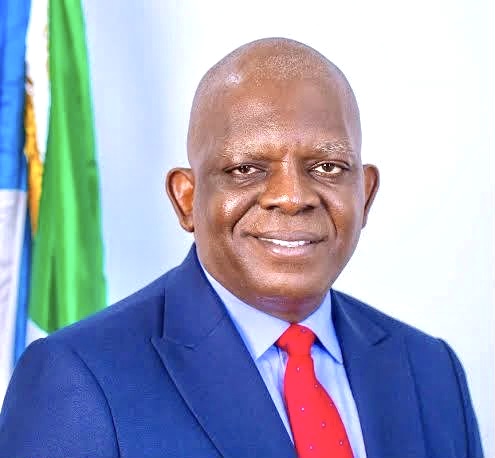
Though the Chairman of the NPERA Governing Board, Dr. Ibrahim Shema, has said that NPERA’s emergence would not create rivalry with the Nigerian Ports Authority, which retains responsibility for port infrastructure and its landlord functions, the government must ensure that the responsibilities of the two institutions are clearly understood and respected.
According to Shema, “This is not about creating competing authorities. It is about establishing a coherent system in which institutions work together, each within its statutory responsibilities.” That the new regulator would focus on reducing uncertainty and unnecessary regulatory barriers, while promoting faster cargo movement and strengthening Nigeria’s competitiveness as a trading and investment destination.
He added that NPA is fundamentally responsible for the administration and development of port infrastructure and related landlord functions, while NPERA’s role is economic regulation. There will naturally be areas where their activities intersect. But intersection should produce coordination, not conflict.
This is the spirit that must be sustained. However, a clear delineation of functions is still not out of place. Nigeria has too many examples of government agencies fighting over territory while the industry suffers. This is more so in the maritime sector.
It is equally necessary to stress that the new regulator must be independent enough to carry out its functions. This means that there should be institutional independence.
A regulator cannot effectively regulate powerful commercial interests if it is constantly looking over its shoulder for political approval.
Hence, NPERA must have the technical capacity, institutional confidence and operational independence required to take difficult decisions. At the same time, independence must not mean absence of accountability.
The Agency must be transparent about its decisions, publish regulatory guidelines, explain tariff determinations and provide accessible mechanisms for appeal and dispute resolution. Its decisions should be based on law, evidence and established regulatory principles—not on political connections or the influence of the strongest stakeholder.
The shipping companies and terminal operators must also adjust. They should recognize that the regulatory environment has changed. Where legitimate regulatory requirements are imposed, compliance should no longer be treated as optional or subjected to endless arguments.
Though they have a right to challenge regulatory decisions through legitimate channels, they also have an obligation to comply with valid regulations.
They must recognize that the existence of a strong regulator is ultimately in their own interest. A predictable regulatory environment protects serious investors from arbitrary competition, provides certainty for investment and ensures that responsible operators are not disadvantaged by those who exploit regulatory weaknesses.
In the same vein, the shippers must finally feel the difference. Of course, at the heart of all these reforms should be the Nigerian shipper.
The ultimate test of NPERA will not be the number of regulations it produces or the number of meetings it holds. It will be whether the Nigerian importer and exporter can say that the ports have become cheaper, faster, more predictable and more efficient.
The test will be whether businesses can calculate their logistics costs with greater certainty, as arbitrary charges decline. It will be whether disputes are resolved quickly. It will be whether cargo spends less time trapped in the ports.
Moreover, it will be whether Nigerian ports become more competitive with other ports in West Africa. Andwhether the cost of using Nigerian ports stops being one of the major impediments to Nigerian trade.
That is when they will say that, indeed, there is a new era.
It’s often said that Nigeria has no shortage of laws, policies and reform documents. What the country has often lacked is implementation.
The NPERA Act must, therefore, not become another impressive piece of legislation that exists largely on paper while the old structure and problems continue.