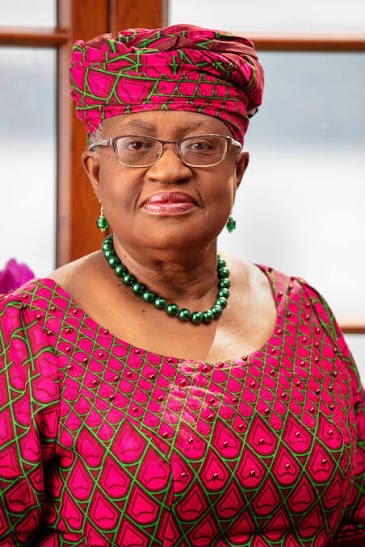
ASABA — Director-General of the World Trade Organization (WTO), Dr. Ngozi Okonjo-Iweala, has declared that Delta State possesses the resources, strategic location and human capital to emerge as Nigeria’s next major industrial hub, urging the state to take advantage of shifting global supply chains, the African Continental Free Trade Area (AfCFTA) and targeted investments to transform its economy.
Addressing investors, policymakers and business leaders at the Delta State Economic and Investment Summit in Asaba, the WTO chief said the changing architecture of global trade presents one of the greatest economic opportunities for Nigeria in decades, but warned that only economies with clear strategies, strong institutions and efficient infrastructure would attract the next wave of international investment.
Her remarks come at a time when governments across the world are repositioning their economies amid rising geopolitical tensions, supply chain disruptions, climate change and rapid technological transformation, all of which are reshaping global production and trade patterns.
Despite these uncertainties, Okonjo-Iweala said global commerce has remained resilient.
According to her, the value of global trade in goods and services climbed to a record $34.65 trillion in 2025, while merchandise trade expanded by 4.6 per cent, largely driven by the global boom in artificial intelligence-related products.
She noted that Africa also recorded encouraging growth, with merchandise exports rising by 3.5 per cent and services trade increasing by 7.3 per cent, fuelled by stronger exports of agricultural commodities, minerals, metals and fuels.
“The difficult headlines should not distract us from the opportunities. The global economy is changing, and countries that prepare today will become the investment destinations of tomorrow,” she said.
The WTO Director-General explained that the COVID-19 pandemic exposed the dangers of concentrating production and sourcing in only a handful of countries, prompting multinational companies and governments to diversify supply chains.
She described the emerging trend as “re-globalisation”—a new phase of globalisation in which manufacturing, processing and investment are spreading to more countries to improve resilience and reduce geopolitical risks.
According to her, Nigeria stands to benefit significantly from this shift if states deliberately position themselves as competitive investment destinations.
She added that Africa’s biggest comparative advantage lies in the African Continental Free Trade Area, which has created a single market of more than 1.4 billion people, making the continent increasingly attractive to global investors seeking access to both regional and international markets.
“The opportunities created by global supply chain diversification and AfCFTA should become central pillars of Delta State’s economic strategy. We must think beyond Nigeria and compete internationally,” she said.
Okonjo-Iweala said Delta State already possesses many of the ingredients required for industrial transformation, including abundant natural gas reserves, seaports and export terminals, fertile agricultural land, solid mineral deposits, transport infrastructure and an expanding pool of skilled graduates produced by its 49 tertiary institutions.
She argued that a stronger Delta economy would not only diversify Nigeria’s industrial base but also reduce mounting pressure on existing commercial centres such as Lagos and Port Harcourt.
Beyond its resource endowment, she praised the state’s fiscal management, citing BudgIT’s 2025 State of States Report, which ranked Delta sixth in overall fiscal performance and second nationally in debt sustainability.
She commended Governor Sheriff Oborevwori’s commitment to limiting dependence on borrowing, describing fiscal discipline as fundamental to sustainable development.
However, she cautioned that natural resources alone do not guarantee economic prosperity.
“Execution is what matters. Infrastructure must be maintained, institutions strengthened and investments carefully prioritised,” she stressed.
Okonjo-Iweala endorsed Delta State’s plan to establish Special Economic Zones (SEZs), describing them as one of the world’s most successful industrial policy instruments for attracting manufacturing investments, expanding exports and creating jobs.
She urged the state government to work closely with the Federal Government to provide reliable electricity, gas infrastructure, transport networks, digital connectivity and efficient regulatory services capable of supporting globally competitive industries.
She pointed to the Lekki Free Zone as an example of how sustained infrastructure investment and investor-friendly policies can stimulate industrial growth and generate large-scale employment.
On agriculture, she advised Delta State to avoid spreading resources thinly across multiple sectors, recommending instead that it focus on a few high-value agricultural commodities where it enjoys genuine comparative advantage.
According to her, strengthening the entire value chain—from production and processing to financing, quality assurance and export logistics—would enable the state to compete effectively in regional and global markets.
The WTO chief also identified the blue economy as one of Delta State’s most underutilised economic assets.
She said the state’s coastline and inland waterways provide enormous opportunities for aquaculture, fish processing, cold-chain logistics, jetties, marine transportation and other maritime services.
Highlighting the scale of the opportunity, she disclosed that Nigeria imports approximately 573,388 metric tonnes of fish and fish products annually, valued at about $866 million.
She said Delta State could significantly reduce the country’s dependence on imported fish by developing modern aquaculture and fisheries industries.
Okonjo-Iweala, however, warned against unsustainable exploitation of marine resources, noting that the WTO is promoting global reforms to eliminate harmful fishing subsidies that encourage overfishing and undermine local fishing communities.
She encouraged Delta State to participate actively in fisheries management programmes being undertaken by the Nigerian Institute for Oceanography and Marine Research in collaboration with the Federal Ministry of Industry, Trade and Investment.
She further identified Delta’s ports and export terminals as strategic assets capable of supporting ship repair, marine logistics, offshore support services and export-oriented maritime industries.
According to her, targeted investment in maritime infrastructure could transform the state into one of Nigeria’s foremost marine logistics hubs while creating thousands of skilled jobs for young people.
The WTO Director-General also emphasised that industrialisation cannot succeed without reliable energy and digital infrastructure.
She called for improved gas pipeline connectivity to supply industries, power plants and mineral processing facilities, while urging greater investment in broadband infrastructure to enable businesses to participate in the rapidly expanding digital economy.
She observed that artificial intelligence, e-commerce and digitally delivered services are increasingly shaping international trade and creating new opportunities for entrepreneurs, especially young people and women-owned businesses.
Expressing confidence in Delta State’s future, Okonjo-Iweala said three powerful forces were converging in its favour: the global diversification of supply chains, Africa’s economic integration through AfCFTA and the growing role of sub-national governments in driving national economic growth.
Quoting renowned Delta-born author Ben Okri, she reminded participants that “the true wealth of Delta State is not merely its oil and gas resources but its people.”
She said that with disciplined governance, strategic planning and sustained investment, Delta State could evolve from a resource-dependent economy into a diversified, export-oriented industrial powerhouse capable of competing on the continental and global stage.
Her remarks reinforced growing calls for Nigerian states to move beyond dependence on monthly federal allocations by developing competitive industries, expanding exports and attracting private investment, especially as the country seeks to accelerate economic diversification and maximise opportunities under the AfCFTA.