Business and Maritime West Africa Analysis
The latest dispute over toll collection on the Lagos port corridors is not simply another quarrel between truckers and a transport committee. It exposes a deeper problem that has persisted over the years. The problem is a thriving illegal toll collections and extortion that was built around congestion, weak enforcement, overlapping authorities and the vulnerability of truck drivers who have little choice, but to pay their way through a maze of checkpoints on their journey to render one of the most critical services in efficient port operations.
The recent petition by the Council of Maritime Transport Unions and Associations (COMTUA) against the Lagos State Trucks and Cargo Operations Committee (LASTCOC) is the latest chapter in a story that has been repeated with remarkable consistency.
COMTUA alleges that LASTCOC has established toll points and checkpoints around Ikorodu terminal, Coconut, Sunrise, Tin Can, Mile 2, Ijora and Lilypond ports’ access routes, extorting N3,000 per truck daily. It further alleges that some operatives have assaulted drivers, deflated tyres and vandalised windscreens, side mirrors and other parts of trucks that their drivers refused to pay the illegal toll.
These are serious allegations that require investigation rather than automatic acceptance as established facts. But neither should they be dismissed as an isolated complaint because similar allegations of extortion, multiple checkpoints, harassment and violence have been made by truckers over several years.
The disturbing question is therefore not simply why another toll point has allegedly appeared. It is why government interventions have repeatedly failed to prevent the problem from returning.
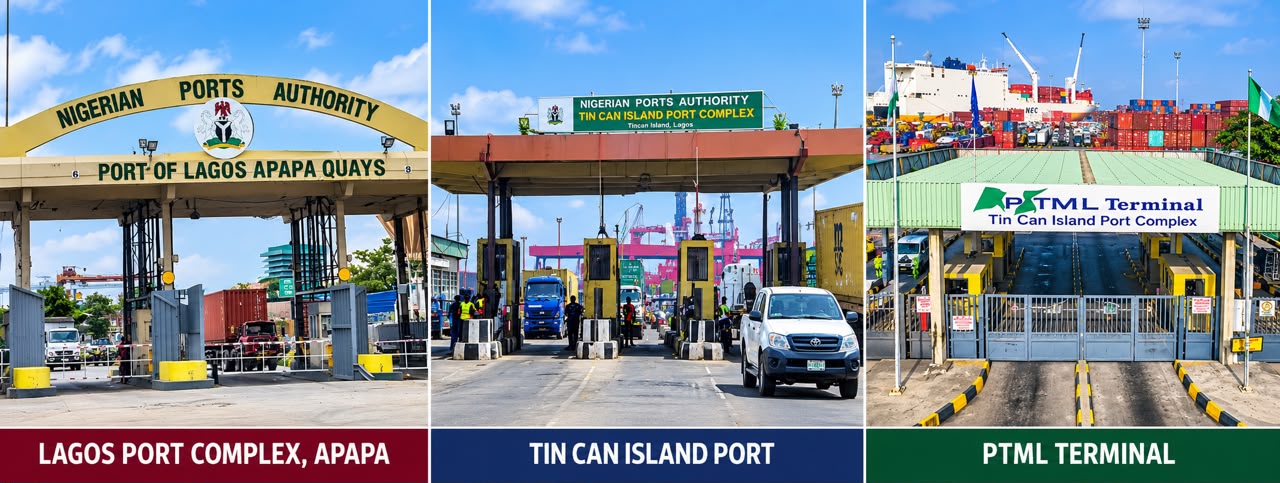
The history of the Apapa and Tin Can corridors shows how a traffic-management problem gradually became an illegal money spinning business. In 2021, the Nigerian Ports Authority (NPA), acknowledged reports that truckers were being extorted by security personnel along the ports’ corridors. The NPA said more than 30 toll points had reportedly emerged around Apapa and Tin Can and described the practice as a major obstacle to the electronic truck call-up system.
Two years later, the problem was still being reported. In July 2023, the NPA again raised the alarm over increasing extortion along the Lagos and Tin Can ports’ access roads, saying its fact-finding had identified flashpoints where truckers were being charged between N500 and N5,000. The Authority also acknowledged that much of the problem occurred outside the port proper, along access roads beyond its direct control. This explanation is important because it helps explain why reforms inside the port have repeatedly struggled to solve problems outside its gates.
In 2021, truck owners were quoted as alleging that there were between 18 and 40 checkpoints along the Apapa routes, with cumulative illegal payments reportedly reaching tens of thousands of naira per truck. By 2023, truckers were again complaining about multiple checkpoints between Mile 2 and Tin Can corridors, while investigations documented touts and various enforcement agents demanding payments from drivers.
The locations and amounts may change, but the pattern remains familiar. The usual pattern is that a truck is stopped, money is demanded, and the driver either pays or risks delay, harassment, damage or bodily harm.
It would therefore be misleading to view the alleged N3,000 daily charge of LASTCOC in isolation. The real economic cost comes from the accumulation of unofficial payments, delays, fuel consumption, missed delivery windows, truck repairs, demurrage, storage charges and impacts on the final cost of products and manufacturing processes.
Historical reports have put the estimated value of illegal collections around the Lagos ports at billions of Naira annually, although such figures should not be taken as certified amounts. What is beyond dispute is that every unofficial payment becomes part of the cost of moving cargo. A truck held at a checkpoint is consuming fuel without moving. A driver delayed for hours may miss a terminal or delivery window. A container that does not move on time may attract additional charges, while damage to a windscreen, side mirror, tyre or other truck component creates another cost for the operator. Eventually, those costs are reflected in the price of goods.
The consequences also extend beyond money. Drivers who face threats, beatings, vandalism or intimidation are operating in an environment where physical safety has become part of the cost of logistics. That is particularly troubling because the truck driver is usually the weakest link in the chain. He carries the cargo, but he does not control the port, the terminal, the traffic system or the regulations governing access. Yet he is often the person left to confront whoever stops his vehicle on the road.
The Eto Example
Perhaps the clearest example of both the possibility and limitation of government reform is the electronic truck call-up system, (Eto).
When the NPA introduced Eto in 2021, the objective was to replace uncoordinated truck movements with an electronic system under which trucks would remain in designated locations until they were called to the port. The reform produced significant results. The NPA reported an 80 per cent reduction in Apapa traffic gridlock within months of its introduction, while the Authority also reported reductions in haulage costs.
This demonstrated that technology could make a difference. But technology could not eliminate an illegal system operating outside the technology. The truck could receive an electronic call-up and still encounter unofficial demands on the road. That is the central weakness that has continued to undermine the reforms. The digital system controls the authorised movement of trucks, but it cannot by itself prevent an unauthorised person from stopping one.
The Many Government Interventions
There have been repeated interventions involving the NPA, Lagos State Government, the police, other security agencies and the Presidential Enabling Business Environment Council (PEBEC). Illegal structures and shanties have been removed, checkpoints dismantled, enforcement operations conducted and stakeholder meetings convened. The electronic call-up system was introduced specifically to bring order to truck movement, while government has also promoted rail and barging as alternatives to road transportation.
Yet the recurring problem is that enforcement tends to be episodic. A checkpoint is removed today and another one emerges later. Officials are warned, truckers complain, committees are formed and new directives are issued, but the underlying incentive remains.
That is why the latest dispute between COMTUA and LASTCOC deserves closer attention. In May 2026, PEBEC conducted an enforcement operation along the Lagos port corridor and dismantled illegal checkpoints as part of an effort to reduce the cost of doing business around the ports. Reports that extortion points resurfaced shortly afterwards demonstrated how difficult it has been to sustain enforcement.
The response has now moved towards stronger monitoring, including proposals to equip truckers and freight forwarders with body cameras so that allegations can be supported by evidence.
That is useful, but evidence alone will not solve the problem if the institutions receiving the evidence do not act on it.
The problem is not simply that there are too many checkpoints. It is that the identity, authority and accountability of those operating them are often unclear.
Where several agencies and non-state actors exercise some form of control over the same corridor, responsibility becomes blurred. A trucker may know that he has been stopped, but may not know whether the person demanding money is acting for a government agency, a union, an association or simply operating independently. That ambiguity creates room for abuse.
The solution should therefore begin with a simple principle. Every legitimate charge should be published, electronically paid and receipted. There should be no cash collection by the roadside, no negotiated payment and no unofficial “settlement”.
The government should also publish a single, authoritative map of all legitimate enforcement points along the port corridors, stating the agency responsible for each point and what that agency is legally permitted to do. Anything outside that framework should be treated as unauthorised.
Against this background, the allegations against LASTCOC should not become another political or institutional argument. The perpetrators should face the full weight of the law. If COMTUA’s allegations are established, the authorities should determine who authorised the alleged toll points, the legal basis for the collections, how much money is being collected, who receives it and where the money goes.
If LASTCOC disputes the allegations, it should equally have the opportunity to produce the legal authority for its operations and demonstrate what charges, if any, it is authorised to collect. The same standard should apply to security personnel, unions, associations and every other actor operating along the corridor.
A transport committee cannot become a toll-collecting authority simply because it has been given a role in managing trucks. A union cannot exercise powers reserved for government, just as a security agency cannot turn a lawful checkpoint into an illegal toll collection point.
Breaking the Cycle
The government now needs to move beyond periodic clearance operations and create a system that makes roadside extortion difficult to organise and impossible to hide.
The entire port corridor should operate as a zero-cash enforcement zone, with legitimate payments made electronically. Enforcement officers should be individually identifiable and linked to a central database, while permanent CCTV and automatic number-plate recognition should cover strategic points between the major truck parks and the ports.
Truckers should have access to a direct digital complaint system through which they can submit photographs, videos, locations and vehicle numbers. Each complaint should generate a reference number and be traceable through investigation and, where necessary, prosecution.
Most importantly, accountability should not stop with the individual caught collecting money. Where repeated extortion occurs under the watch of an enforcement unit, the command structure should be examined. If evidence establishes complicity or failure to act, responsibility should extend beyond the roadside collector.
And where systematic collections are uncovered, investigators should follow the money. The important question is not simply who collected N3,000 from one truck, but how many trucks were affected, how much was collected, who organised the operation and where the proceeds went. That is the difference between dismantling a checkpoint and dismantling the system behind it.
Nigeria has invested heavily in port modernisation, digitalisation and trade facilitation. The NPA has introduced electronic systems for truck movement and gate operations, while government continues to pursue measures designed to reduce logistics costs and make Nigerian ports more competitive.
But a port is not only its terminal. It is the entire chain from the vessel to the importer, exporter, manufacturer or final consumer. If cargo can be processed electronically inside the port but a truck must pass through a series of illegal collection points outside it, the reform remains incomplete. If a container can be cleared efficiently but spends hours being delayed by those checkpoints, the cost of that inefficiency is ultimately passed to the economy.
This is why what’s happening along Lagos ports’ corridors matter far beyond the city. They are critical arteries for Nigeria’s trade, manufacturing, imports and exports. Their dysfunction affects the price of goods, the competitiveness of businesses and the credibility of the country’s ease-of-doing-business reforms. The recurring extortion problem should therefore be treated as an economic governance issue, not merely a traffic nuisance.
For years, government has focused heavily on removing the visible symptoms—gridlock, illegal parking, shanties and checkpoints. What is needed now is a stronger focus on the incentives and networks that allow those structures to return.
The solution does not require another endless cycle of task forces, warnings and stakeholder meetings. It requires a system in which every legitimate checkpoint has a clearly defined purpose, every authorised payment is electronic and traceable, every officer is identifiable, every complaint is investigated and every proven violation attracts consequences.
The Lagos ports’ corridor cannot function as a marketplace for illegal toll collectors while Nigeria is trying to build a modern, competitive port system.
The law already provides the foundation. What is missing is consistent enforcement strong enough to ensure that those who operate outside it, cannot simply wait for the next enforcement operation to end before returning to business.
Until that changes, Nigeria will continue to modernise its ports, while leaving the roads leading to them vulnerable to the very practices that make doing business in those ports expensive, unpredictable and unnecessarily risky.