
Business and Maritime West Africa Editorial
The Nigerian Maritime Administration and Safety Agency’s latest attempt to galvanise investment in Nigeria’s blue economy comes with an impressive number. That number is N25 trillion.
At a high-level gathering of shipowners, bankers, investors, industry associations and government agencies at Eko Hotel, Lagos, NIMASA unveiled its Blue Economy Accelerator Programme (BEAP) and National Innovation Hackathon, describing the initiative as part of efforts to unlock what it and its technical partner, Opolo Global Innovation, put at N25 trillion in untapped blue-economy opportunities.
The ambition is difficult to fault. Nigeria has an extensive coastline, a large Exclusive Economic Zone, major seaports, inland waterways, offshore oil and gas activities and a sizeable maritime services market. The country undoubtedly has significant economic opportunities in and around its waters.
The more important questions are how the N25 trillion figure was arrived at and whether the assumptions behind it adequately account for Nigeria’s present ability to participate in and capture that value.
The N25 trillion has been presented as the size of the opportunity, but the public announcement does not provide a sector-by-sector calculation showing how the figure was derived. There is no detailed breakdown indicating how much is attributed to shipping, ports and logistics, offshore services, fisheries and aquaculture, shipbuilding and ship repair, inland waterways, marine tourism, maritime technology or other components of the blue economy.
There is also no clear indication of whether the N25 trillion represents annual economic value, cumulative investment opportunity over a specified period, the estimated value of currently untapped activities or potential additional value if identified constraints are removed.
That distinction is very important. An estimate of annual economic output is fundamentally different from an estimate of investment opportunities, just as the value of an entire maritime economy is different from the value of what is currently untapped. Without knowing which of these the N25 trillion represents, investors, policymakers and the public cannot properly interrogate the figure.
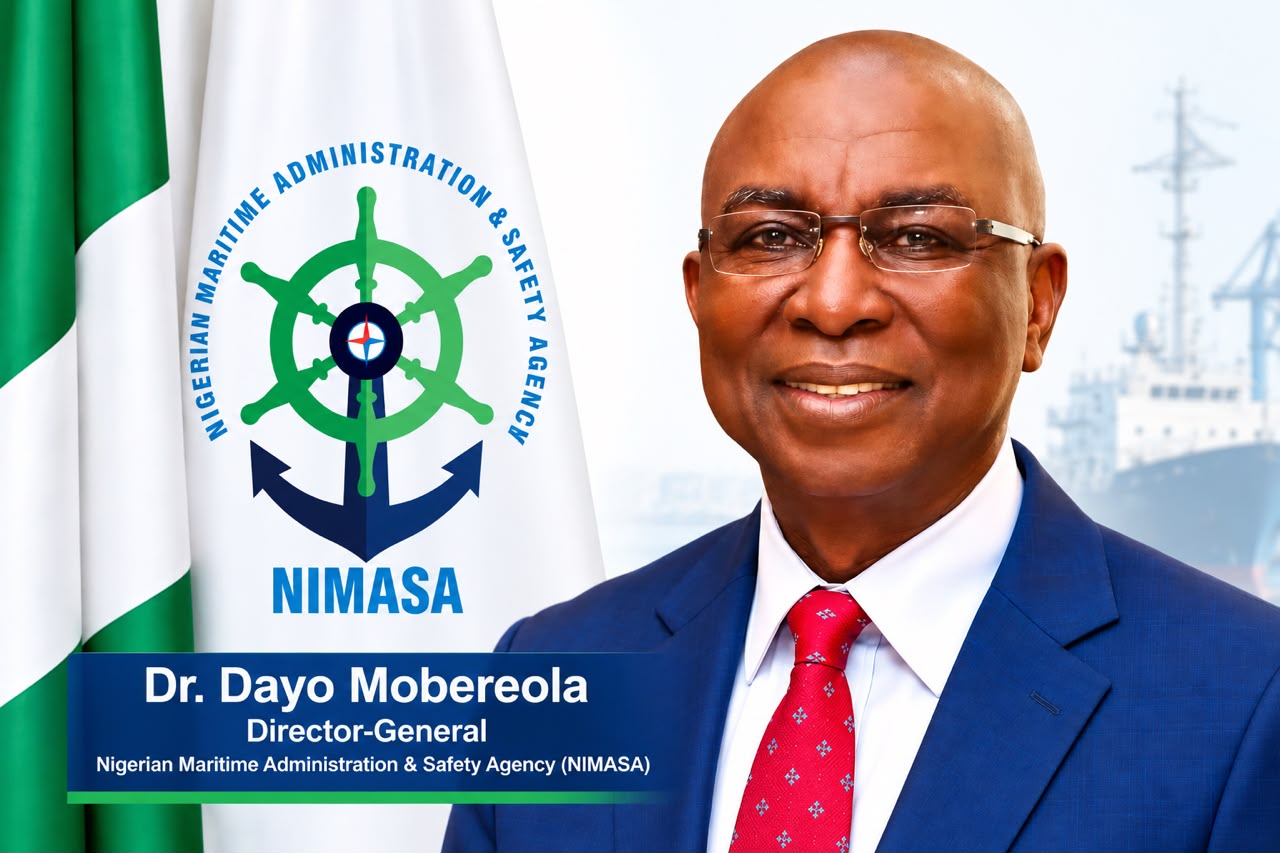
NIMASA Director-General, Dr Dayo Mobereola, has also said Nigeria currently captures less than three per cent of the value generated across the maritime value chain. But that figure should not automatically be treated as the basis for the N25 trillion calculation unless the agency provides the underlying data connecting the two.
For illustration, if N25 trillion represented the total annual value of the relevant maritime economy, three per cent would amount to N750 billion, leaving N24.25 trillion outside current Nigerian capture. But that is only arithmetic, not evidence that NIMASA calculated the N25 trillion in this manner. If N25 trillion represents additional investment opportunities across several subsectors, applying the three-per-cent figure to it would produce an entirely different interpretation.
This is why the methodology is crucial as much as the headline. A credible blue-economy investment roadmap should identify the sectors covered, establish their current economic value, state the assumptions used to estimate future opportunities, distinguish existing activity from genuinely untapped value and explain what proportion of the projected value is expected to accrue to Nigerian companies.
It should also answer the critical question of how much of the N25 trillion Nigerian businesses can realistically capture and retain. This question brings the discussion to indigenous shipping, where the gap between ambition and present reality is particularly visible.
At the same time NIMASA was bringing banks and investors together to discuss a N25 trillion opportunity, indigenous operators were still encountering significant barriers in accessing the Cabotage Vessel Financing Fund (CVFF), the principal financing mechanism created to support Nigerian vessel ownership.
As of September 2026, NIMASA had reportedly received 92 CVFF applications, but only 20 had reached the Primary Lending Institutions, while just one had reportedly been reviewed and forwarded for approval. No disbursement had yet reached an indigenous shipowner, with banks raising issues including creditworthiness and evidence of cargo commitments.
The problem is not simply that financing is difficult, it’s the financing-cargo cycle behind it. A shipowner needs finance to acquire a vessel; the bank wants evidence that the vessel will generate sufficient revenue to repay the loan, with a cargo contract providing one of the strongest forms of assurance. Yet cargo owners may themselves be reluctant to commit substantial business to an operator that does not already possess the vessel and operational capacity.
NIMASA has understood this problem for years. In 2023, the agency disclosed discussions with NNPC Shipping over an off-take arrangement for vessels to be financed through the CVFF, recognising that vessels require cargo to remain commercially viable. Yet three years later, the same fundamental obstacle remains.
That makes the CVFF more than a financing issue. It is a useful reality check for the N25 trillion ambition. If the mechanisms required to put Nigerian-owned vessels into service and connect them to cargo remain difficult to operationalise, then the question of who will capture the projected maritime value becomes unavoidable.
Maritime activity does not necessarily translate into Nigerian economic ownership. Nigeria can have busy ports, increasing vessel traffic and substantial cargo volumes while foreign-owned companies control significant portions of shipping and maritime services. The activity may be taking place in Nigeria, but the ownership of the assets, the provision of services and the retention of profits are separate questions.
This is the distinction between participating in a maritime economy and capturing its value. It is also where the proposed innovation programme needs to be placed in context. Technology can improve cargo documentation, vessel tracking, port processes, logistics, compliance, maritime safety, fisheries and inland-waterway operations. An accelerator can help promising entrepreneurs develop and commercialise such solutions.
But innovation is not a substitute for the underlying commercial ecosystem. Technology can make maritime businesses more efficient; it cannot, by itself, create the cargo, financing and market access required to make those businesses viable.
The success of the NIMASA initiative should therefore be measured beyond the hackathon, the number of participants and the investment pledges made at launch. The more consequential indicators will be whether Nigerian operators secure finance and cargo, whether Nigerian-owned vessels enter service, whether seafarers obtain sustained employment, whether maritime businesses attract long-term private capital and whether a greater share of the value generated across the maritime chain remains within Nigeria.
The N25 trillion ambition can become a useful organising target if it is supported by a transparent economic model and a credible implementation framework. But an opportunity estimate should not be confused with money already available to be captured, and the existence of a large theoretical market does not automatically mean that the domestic businesses required to exploit it are ready or adequately financed.
Nigeria’s maritime sector has heard many ambitious projections before. It has also witnessed numerous stakeholder meetings, policy consultations, workshops and assurances on indigenous shipping, maritime finance and cargo access.
The challenge now is to connect the ambition to measurable outcomes. That means showing the numbers behind the N25 trillion, identifying the sectors that make up the estimate, establishing the assumptions on which the projection rests and setting out how much of the resulting value Nigeria expects to capture. It also means demonstrating that the financial and commercial mechanisms exist to enable Nigerian businesses to participate.
The Nigerian shipowner struggling to cross the financing barrier because he cannot first produce a cargo contract is therefore not a peripheral issue in the blue-economy conversation. His predicament exposes one of the central assumptions that must be resolved if the projected opportunity is to translate into local economic value.
Until the methodology behind the N25 trillion is made clearer and the mechanisms for meaningful Nigerian participation become demonstrably workable, the figure should be understood as a potentially significant economic opportunity rather than an established pool of value waiting to be collected.
The real achievement will come when the projection can be traced through transparent numbers to actual investment, functioning businesses, Nigerian-owned assets, cargo carried by Nigerian operators and value retained within the Nigerian economy.
That is where the blue-economy dream will have to meet the hard arithmetic of the market.