By Okey IBEKE
The proposed $7 billion Gateway Deep Seaport at Ogun Waterside has reopened another wave of agitation and debates over the alleged neglect of the Eastern ports. It has again raised an old, legitimate question, which is why have Nigeria’s Eastern ports remained so far below their potential despite decades of federal governments’ political and economic influence and promises?
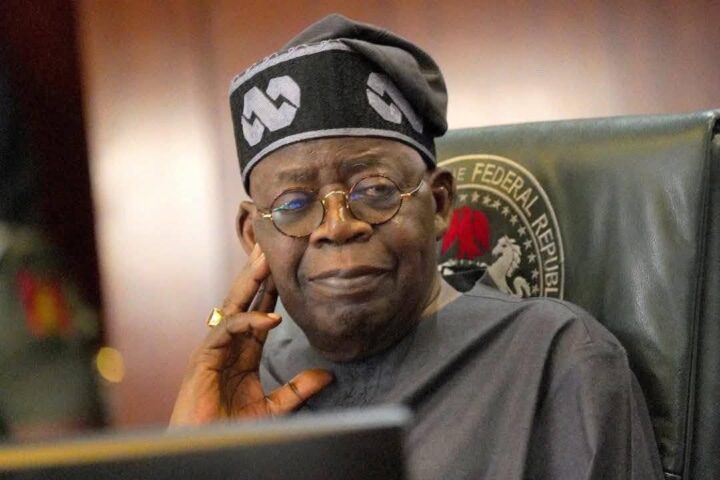
While the current debates and agitation subsist, the question that any fair-minded person would ask is: Why is President Bola Tinubu being made to carry the entire burden of responsibility for a problem that predates his administration by more than two decades?
Indeed, the condition of the Eastern ports is a serious national issue. Port Harcourt, Onne, Warri and Calabar ports should be important components of Nigeria’s maritime economy. Their potential for trade, logistics, manufacturing and employment is too significant to be ignored.
But the history of their underdevelopment or obvious neglect did not begin in 2023. It spans successive administrations and includes periods when politicians from the South-East and South-South occupied some of the most influential positions in the country.
That history deserves to be examined honestly. The neglect started in 1999, when Mrs Kema Chikwe served as Minister of Transport from 1999 to 2001. The late Ojo Maduekwe followed from 2001 to 2003, while Abiye Sekibo, from Rivers State, served from 2003 to 2007. Rotimi Amaechi, also from Rivers State, was Minister of Transportation from 2015 to 2022.
Their combined periods in the ministry amounted to roughly 16 years. That is a substantial period in the history of Nigeria’s maritime administration.
True, these ministers did not possess unlimited powers. Port development involves the Presidency, the Ministry, the Nigerian Ports Authority, the National Assembly, concessionaires and other institutions.
But ministers responsible for transportation and maritime affairs had influence over policy priorities, agency supervision, infrastructure planning and the direction of the sector. So their records should form part of any serious discussion about how the Eastern ports arrived at their present condition.
The same applies to former President Goodluck Jonathan, who came from Bayelsa State and governed Nigeria from 2010 to 2015. His administration inherited the same port problems, and had five years in which to address them. It would therefore be historically convenient, but inaccurate, to portray the difficulties of the Eastern ports as a problem created by the present administration.
The more difficult question is why successive administrations, including those led or influenced by politicians from the region, did not produce a sustained transformation of the Eastern maritime corridor.
Perhaps, one minister that deserves special mention in this saga is Chibuike Rotimi Amaechi who was the supervising minister of transportation which included maritime and port activities, before the present administration. Amaechi was almost the most influential of all ministers in late President Muhamadu Buhari’s administration. He had the ears of President Buhari at any time, and always had his way with him.
On several occasions, he obtained anticipated approvals from the President on contracts and policy actions dear to him or he had interest in. But never did it cross his mind to use his influence on the President to raise the fortune of the eastern ports, or at least make them more functional. Instead, he initiated and paid more attention to projects in the late President’s home town and state.
The National Assembly also has its own place in the story. Over the years, lawmakers from the region occupied strategic positions on the parliamentary committees responsible for maritime affairs. Emeka Ihedioha for instance, chaired the House Committee on Marine Transport between 2003 and 2007 and was involved in significant maritime legislation. Ifeanyi Ugwuanyi also chaired the House committee responsible for marine transport, while Okey Ude was another prominent lawmaker who occupied the committee chairmanship during the period when the Eastern ports remained major subjects of concern.
At the Senate level, Dr. Ugochukwu Uba chaired the Senate Committee on Marine Transport for four years. The broader legislative record therefore cannot fairly be described as one of complete inaction.
Granted that legislation is only one part of parliamentary responsibility, one would still ask why successive National Assemblies could not exert sufficient pressure over the physical development and commercial competitiveness of the Eastern ports.
Where were the sustained demands for improved navigation channels? Where was the pressure for reliable rail and road links? Where was the comprehensive legislative framework for making the Eastern ports commercially competitive with Lagos? Where were the regular detailed oversight reports showing what had been done or achieved concerning the eastern ports? These are questions that should be answered from the records rather than through political rhetoric.
What about the governors and political parties?Obviously, the responsibility also extends beyond Abuja. Successive governors in Rivers, Abia, Cross River, Delta, Anambra and other states in the Eastern maritime corridor have had their own opportunities to influence the situation.
They control land. They are responsible for improving access roads. They can create industrial clusters. They can prepare investment propositions. They can work collectively to attract private capital. Their representatives in the National Assembly can lobby for infrastructure and scrutinize federal spending.
Political parties can make regional infrastructure part of their negotiations with the Federal Government. National party leaders from the region can use their influence to press for strategic economic projects.
They could not do all these, but preferred to use the political power they wielded for personal gratifications –lobbying for contracts and appointments.
Hence, for decades, political discussions in the region have often centred on appointments, elections, party structures and access to political power. But the ports, which could provide enduring economic benefits through trade, manufacturing, logistics and employment, have not enjoyed the same sustained political attention.
Be that as it may, none of this, however, gives the President Tinubu administration a free pass. President Tinubu inherited the Eastern-port problem, but he now owns responsibility for what happens to those ports under his administration.
That responsibility has become more urgent following the controversy generated by the proposed Ogun Waterside investment. In the midst of that controversy, Minister of Marine and Blue Economy Adegboyega Oyetola announced that President Tinubu had approved the upgrade of the Eastern ports.
The announcement is quite welcome. But it also raises an immediate question: what happened to the upgrade programme the minister himself announced several months earlier?
In April, at the height of the controversy over the £760 million UK-backed financing arrangement for the modernization of Apapa and Tin Can Island ports, Oyetola announced the commencement of the upgrade of the Eastern ports. From all indications, the announcement appears clearly intended to reassure stakeholders that the federal government was not concentrating its maritime investment exclusively on Lagos.
But it came without the details normally associated with a major infrastructure programme. There was no publicly defined scope of work for each port, no clear cost allocation, no identified contractor, no detailed procurement timetable and no firm delivery schedule.
The absence of detail led some stakeholders to question whether the announcement was principally intended to calm the controversy surrounding the Lagos ports financing arrangement.
Though this perception could be interpreted as a mere stakeholder concern, and not an established fact, it could still be said that if the April announcement represented the actual commencement of the upgrade programme, the government should by now be able to show what has happened since then. These include, what procurement stage has been reached? What contracts have been awarded? What work has commenced at Port Harcourt, Onne, Warri and Calabar? How much has been committed or spent? And what is the timeline for completion?
The latest announcement that President Tinubu has now approved the upgrade makes those questions even more compelling.
If the April announcement was real and intended to be taken seriously, the Ministry should explain what the latest approval adds. If the latest approval represents a substantially different or expanded programme, that too should be made clear.
The easiest way to settle the concern is through specifics. For each port, the Ministry should publish the scope of work, estimated cost, funding source, procurement status, the contractor where applicable, commencement date and expected completion date.
It should also state what the upgrade is expected to achieve in practical terms: channel depth, berth capacity, vessel size, cargo-handling capacity, turnaround time and projected cargo growth.
Doing this would transform the announcement from a political reassurance into an actionable programme. It would also demonstrate that the government’s response to the Ogun controversy is part of a genuine national port-development strategy rather than simply a reaction to political pressure.
The Tinubu administration should therefore be judged not by another announcement, but by what follows it. If procurement is completed, contracts awarded, construction commenced and measurable improvements delivered, the doubts surrounding the April announcement will disappear. On the other hand, if the process remains at the level of statements, skepticism will persist.
That is why Oyetola now has an opportunity to provide something more valuable than another assurance: a detailed implementation plan.
It is also important not to portray every Eastern port as equally dysfunctional. Onne remains a significant maritime and oil-and-gas logistics centre. Port Harcourt has an established commercial and industrial hinterland. Warri has strategic importance to the Delta economy, while Calabar has geographical advantages that have been constrained by navigational and infrastructure challenges.
The answer, therefore, is not necessarily to build another port simply because another part of the country is attracting investment. Each facility should be developed according to its commercial potential.
The Eastern states must also take greater responsibility for developing the economic ecosystem around the ports. A port cannot thrive in isolation. It needs roads, rail, warehouses, industrial clusters, power, security and cargo.
The political leadership of the region should therefore be asking what it can do to make these facilities more attractive to investors and shipping lines rather than relying exclusively on federal intervention.
The proposed Ogun investment should not become another occasion for accusing Abuja of favouring one region. It should prompt a broader examination of how Nigeria develops its maritime infrastructure.
President Tinubu’s administration should, therefore, ensure that the long chain of promises finally gives way to contracts, construction and measurable results.
The administration should strive to prove skeptics wrong. All the promises and pronouncements should be concretized. The latest announcement of approval for the upgrade and modernization of the eastern ports should not, along with the April pronouncement, be another sound bite, a political response to criticisms or just another political gimmick.
◦