Business and Maritime West Africa Analysis
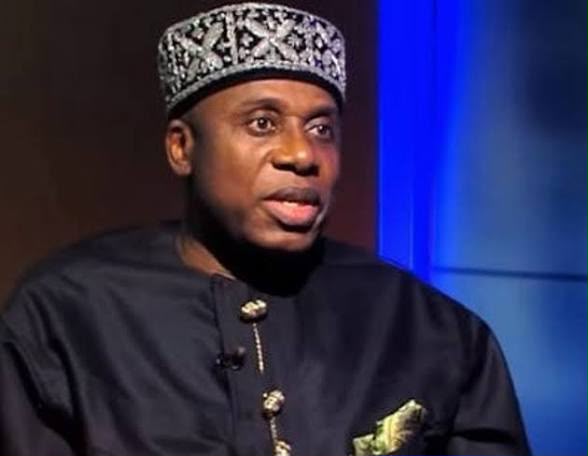
The renewed agitation for the rehabilitation of Nigeria’s Eastern ports has reopened an uncomfortable question of why has the country failed for decades to unlock the commercial potential of ports in the South-East and South-South, and what blame should be apportioned to Rotimi Chibuike Amaechi, the African Democratic Congress vice presidential candidate in the forthcoming election, who had the power to change that history?
The signing of a £746 million financial agreement for the modernisation of Lagos and Tin Can Island ports, alongside attention generated by the proposed Gateway Deep Seaport in Ogun State, has intensified concerns about the perceived concentration of maritime investment around Lagos. Though the proposed Gateway Deep Port project is purely driven by Ogun State Government.
While acknowledging that the grievances are legitimate, but directing them only to President Bola Ahmed Tinubu’s administration, without questioning the record of previous governments and the powerful political figures who served in them, is not right.
One of those figures is Rotimi Amaechi, former governor of Rivers State and Minister of Transportation under President Muhammadu Buhari from November 2015 to May 2022. For nearly seven years, Amaechi occupied a strategic position at the centre of federal transportation policy. He was influential within the administration and presided over an ambitious railway development programme and multi million dollar maritime sector projects.
It should therefore, not be out of place for his tenure to be subjected to scrutiny. If Eastern ports remain disadvantaged today, Amaechi cannot simply hide under the grievances against the present administration, without accounting for what he did—or failed to achieve—when he had the authority and political influence to make a difference.
Onne, Port Harcourt, Calabar and Warri occupy strategically important positions along Nigeria’s coast and waterways. With adequate facilities, efficient operations and dependable connections to inland markets, they could serve regional manufacturers, agricultural exporters, importers and the wider economy.
Instead, years of insufficient investment have left the Eastern ports struggling to realise their potential. In August 2025, Nigerian Ports Authority Managing Director Abubakar Dantsoho acknowledged the consequences of underinvestment and the growing competitiveness of ports in countries such as Togo and Côte d’Ivoire.
The consequences of Amaechi’s failures extend beyond the maritime industry. When ports are inefficient or poorly connected, businesses pay more to move goods, supply chains become less predictable and investment opportunities are lost. Excessive dependence on Lagos also concentrates economic activity and transport pressure in one part of the country.
Amaechi’s years as transportation minister coincided with major railway investments. The push for railway expansion led to delivering of some standard gauge rails even to Maradi, an insignificant border town in Katsina state.
The issue is not that other parts of Nigeria should have been denied railway developments. It is that the same period did not deliver a completed, operational standard-gauge freight corridor linking the Eastern ports and major cities of South-East and South-South to inland commercial, industrial and logistics hubs.
What Amaechi brought to the region was the proposed outdated narrow gauge Port Harcourt–Maiduguri railway which he failed to even start before leaving office.
For a region whose economic development depends partly on efficient movement of cargo, Amaechi’s failure created a consequential gap. Railway connectivity could have expanded the reach of Eastern ports, improved freight movement and helped businesses access markets beyond their immediate locations. The absence of a functioning corridor meant that this opportunity remained unrealised.
Amaechi’s defenders may argue that railway and maritime projects require enormous funding, presidential approval and coordination among several institutions. That is true, but it does not absolve a minister of responsibility. A transportation minister is not expected to finance and construct every project personally; he is expected to establish priorities, champion projects, leverage political influence to secure commitment and drive implementation, the way he did for other regions.
The fair question, therefore, is not whether Amaechi alone could have delivered the railway and upgrade of Eastern ports. It is whether he used his considerable influence in Buhari’s administration to advance the Eastern region’s needs with the same determination demonstrated in other parts of the country.
Where is the completed freight corridor and maritime infrastructure that the region could point to as a defining achievements of his tenure? What concrete progress did he secure, and what commitments did he leave behind that translated into delivery? These are questions of public accountability and Amaechi should answer them with evidence rather than political rhetoric.
A critical examination of Amaechi’s past failures should not become an excuse for the present administration. Tinubu inherited substantial infrastructure deficits, but he must be judged on whether his government can correct them.
On the port side, Tinubu’s administration has commissioned a 4.8-kilometre road project at Onne in March 2024, alongside six marine craft intended to improve vessel safety and operational efficiency. The government also highlighted more than $1 billion in reconstruction and rehabilitation investments across port facilities, including Onne.
In August 2025, the NPA announced an intensified effort to reposition Onne, Port Harcourt, Calabar and Warri. Other reported measures included improvements to navigational aids, harbour craft, access infrastructure and channel-depth planning.
These initiatives deserve assessment on their results, not their announcements. The NPA must show what has been completed, what remains outstanding and whether port users are experiencing measurable improvements in efficiency, cost and reliability.
Meanwhile, the £746 million UK finance agreement for Lagos and Tin Can Island ports, signed in March 2026, covers the renovation of 20 berths across the two port complexes. Lagos and Tin Can Island handle enormous cargo volumes and have genuine modernisation needs. Investment in the ports is not, by itself, proof of discrimination against the Eastern ports. But the Federal Government should fast track its already laid out plans for Eastern ports and also provide partway for how the region’s wider freight connectivity will be improved.
Amaechi’s political ambitions make assessment of his tenure as minister very necessary now. A former minister who criticises the performance of the current administration must be prepared to submit his own record to the same scrutiny. It is not enough to point to the decades of neglect. The issue is what he did during the years when he was in a position to influence the outcome.
He had almost seven years as transportation minister and yet, abandoned the ports. He presided over a period of major railway construction elsewhere in the country. Yet the region was left without the completed standard-gauge freight corridor needed to connect its ports to inland markets. His stance against the establishment of the National Maritime University at Okerenkoko, also raised questions about his commitment to building maritime capacity in the Niger Delta.
These facts do not prove that Amaechi alone caused Eastern ports’ difficulties. Port facilities fall under the responsibilities of maritime agencies, while railway projects depend on federal funding, approvals and implementation arrangements. Successive administrations, regional governors, legislators and other stakeholders also bear responsibility for the long years of neglect.
But shared responsibility is not the same as no responsibility. Amaechi’s office gave him a significant opportunity to shape transportation priorities. He should be judged on the progress achieved during his tenure, the gaps that remained and the strength of the case he made for the region. It would be politically convenient to condemn the present government while ignoring his own failures.
Before Rotimi Amaechi asks Nigerians to entrust him with higher office, he owes the country a clear account of what he achieved for Eastern maritime and transportation infrastructure and why the region was left without the railway freight breakthrough it needed during his tenure.