
By Okey Ibeke
In the recent past, the performance of the Nigeria Customs Service (NCS) was largely measured by the revenue it generated for the Federal Government and the volume of contraband intercepted by its officers. Surpassing annual revenue targets, increasing the quantity of seizures, and conducting aggressive anti-smuggling operations were the primary benchmarks by which the government and the public judged the Service.
However, the responsibilities of modern Customs administrations have expanded considerably beyond these traditional roles. In an increasingly interconnected global economy, Customs is expected not only to collect revenue and secure national borders, but also to facilitate legitimate trade, strengthen economic competitiveness, protect society and the environment, and build the institutional capacity required to respond to emerging commercial and security challenges.
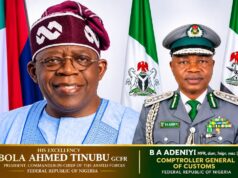
These broader responsibilities form the foundation of the World Customs Organisation’s (WCO) Performance Measurement Mechanism (PMM)—a comprehensive framework designed to evaluate the efficiency, effectiveness, and institutional development of Customs administrations against internationally recognised indicators. For Nigeria, the PMM provides an objective guide for evaluating the reforms introduced since June 2023, when President Bola Ahmed Tinubu appointed Bashir Adewale Adeniyi as Comptroller-General of Customs. More importantly, it offers a basis for assessing the Service beyond raw revenue figures and seizure statistics, focusing instead on how its operations contribute to national economic development, trade competitiveness, and security.
The WCO Performance Measurement Mechanism (PMM)
Developed by the WCO Council in June 2023, the Performance Measurement Mechanism provides member administrations with a structured, evidence-based approach to assessing their operations. The framework evaluates performance across four interconnected dimensions:
1. Trade facilitation and economic competitiveness
2. Revenue collection
3. Enforcement, security, and protection of society
4. Organisational development
Each dimension contains expected outcomes and corresponding indicators designed to measure actual results rather than merely the existence of policies or programmes. The framework also encourages the practical application of WCO instruments covering trade facilitation, risk management, valuation, compliance, and institutional development. Participation involves voluntary self-assessment, with peer reviews available to strengthen the credibility of reported results. For the NCS, these four dimensions offer a clear lens through which the government and stakeholders can assess the achievements, gaps, and future direction of Adeniyi’s reform programme.
1. Trade Facilitation and Economic Competitiveness
The most economically significant aspect of the reforms under Adeniyi is the growing emphasis on trade facilitation as a core Customs responsibility. Nigerian importers and exporters have historically struggled with prolonged cargo clearance procedures, multiple physical inspections, documentation bottlenecks, and unpredictable administrative requirements. These challenges inflate business costs, disrupt manufacturing supply chains, and weaken the competitiveness of Nigerian goods in international markets. Under the PMM, Customs performance must therefore be judged by how effectively it eliminates these bottlenecks.
Key trade facilitation milestones include:
• Authorised Economic Operator (AEO) Programme: Formally launched by the NCS in February 2025 in accordance with the WCO SAFE Framework of Standards, the AEO programme rewards businesses with established compliance records and strong supply-chain security with simplified procedures, fewer physical inspections, and expedited clearance. While the initial pilot reduced average cargo release times from the conventional 168 hours down to 43 hours, an NCS monitoring report released in February 2026—and widely endorsed by stakeholders—showed a further drop to 41 hours among certified operators, alongside substantial reductions in operating costs and demurrage payments.
• B’Odogwu Unified Customs Management System: Deployed under the NCS Modernisation Project, B’Odogwu is an indigenous digital trade management platform that centralises declaration processing, risk management, duty calculation, and manifest handling. Its expansion across Customs formations has phased out fragmented manual procedures in favour of an integrated electronic environment. Notably, the platform’s architecture gained continental recognition when the African Continental Free Trade Area (AfCFTA) Secretariat selected it as a model for regional trade facilitation.
• National Single Window (NSW) Rollout: Complementing B’Odogwu is the Federal Government’s National Single Window, whose Phase One went live on March 27, 2026. Driven alongside the NCS, the portal unifies import permits, licences, certificates, and cargo manifests across key agencies—including NAFDAC, SON, NESREA, and port authorities—into a one-time digital submission. Building on Phase One’s import compliance gains, the second phase is scheduled to commence in December 2026 to target export bottlenecks and eliminate documentation loopholes.
• WCO Time Release Study (TRS) and PEBEC Collaboration: Unveiled in January 2026, the WCO Time Release Study examined cargo clearance workflows and pinpointed delays caused by manual handoffs and fragmented agency coordination, projecting that targeted reforms could cut clearance times by up to 40 per cent. To translate these findings into action, Adeniyi partnered with the Presidential Enabling Business Environment Council (PEBEC) in April 2026 to launch a five-pillar operational reform agenda focused on joint inspections, risk-based clearance, scanning optimisation, strict service timelines, and inter-agency coordination.
2. Revenue Collection and Compliance Management
Revenue collection remains one of the most visible indicators of Customs performance in Nigeria, particularly given the Federal Government’s urgent drive to diversify public revenue and realise its $1 trillion economic ambition. Under Adeniyi, the Service reported collections of approximately ₦6.1 trillion in 2024, rising to ₦7.281 trillion in 2025—surpassing its approved annual target of ₦6.584 trillion. Momentum continued into 2026, with the Service generating roughly ₦4.03 trillion in the first half of the year toward an ambitious annual target of ₦11.07 trillion.
However, the WCO framework encourages a deeper examination of revenue administration beyond headline figures. While higher collections can be influenced by trade volumes, exchange-rate adjustments, and fiscal tariff revisions—such as the May 2026 duty reductions on imported vehicles—the structural drivers of NCS revenue growth have been the blocking of leakages through accurate valuation, digital tracking, and compliance enforcement.
Consequently, Post-Clearance Audit (PCA) has become a central pillar of the Service’s operations. Rather than subjecting every consignment to prolonged physical examination at the ports, the NCS increasingly relies on risk management and post-clearance verification of commercial records. Supported by technical cooperation with the WCO and the World Bank Group, alongside new Customs laboratories and advance rulings, this approach ensures revenue assurance without stalling trade. The AEO programme illustrates how facilitation and revenue reinforce each other: a February 2026 evaluation revealed that revenue generated from 51 certified operators grew from ₦1.222 trillion prior to certification to ₦1.585 trillion afterward. Sustainable revenue mobilisation clearly depends on risk-based compliance rather than physical bottlenecks.
3. Enforcement, Security, and Protection of Society
The third dimension of the WCO PMM addresses Customs’ critical mandate to protect society from illicit international trade. Nigeria faces persistent threats from arms trafficking, narcotics, counterfeit pharmaceuticals, wildlife trafficking, intellectual property violations, petroleum smuggling, and prohibited imports. Beyond eroding government revenue, illicit firearms threaten national security, narcotics undermine public health, and counterfeit medicines endanger lives.
Under Adeniyi, NCS enforcement has shifted decisively toward intelligence-led operations. During 2025, the Service recorded more than 2,500 seizures nationwide with an aggregate duty-paid value exceeding ₦59 billion, intercepting narcotics, counterfeit pharmaceuticals, arms and ammunition, wildlife products, and other prohibited items.
In 2026, the Service further modernised its border security architecture by integrating non-intrusive cargo scanning technology directly with electronic declaration systems to reduce human interference. It also expanded the use of geospatial surveillance, geofencing, electronic cargo tracking, and real-time intelligence sharing via the INTERPOL Data Centre at Customs Headquarters. These measures embody the WCO SAFE Framework by securing international supply chains while allowing legitimate cargo to move uninterrupted.
4. Organisational Development and Institutional Integrity
The fourth PMM dimension—organisational development—is the engine driving the Service’s achievements, though it receives the least public attention. It encompasses human resource development, technical competence, institutional integrity, technological capability, and organisational resilience. Modern Customs operations require officers skilled in international valuation standards, tariff classification, rules of origin, data analytics, and post-clearance auditing.
Under Adeniyi, the Service has invested heavily in specialised capacity building and officer welfare. At a WCO donors’ conference in Abuja in April 2025, he disclosed that more than 5,000 Customs officers had been trained in specialised disciplines, including valuation, classification, rules of origin, and post-clearance auditing. These training drives have been paired with merit-based promotions, work-life balance initiatives, and expanded medical infrastructure for officers and border communities.
Equally critical is the focus on institutional integrity. In September 2026, the WCO collaborated with the NCS to strengthen corruption risk assessments, review internal procedures, and establish preventive safeguards. The exercise produced comprehensive corruption risk maps and an updated Integrity Action Plan containing over 100 action items spanning operational workflows, regulatory vulnerabilities, and administrative controls. Because high revenue figures cannot compensate for weak staff discipline or opaque procedures, sustainable reform demands consistent administrative accountability and transparent complaint resolution.
Translating Global Standards into Regional and Domestic Impact
A defining feature of the current reform programme is the direct alignment between Nigeria’s modernisation initiatives and established WCO instruments—treating international standards not merely as diplomatic talking points, but as practical operational tools. Furthermore, Adeniyi has expanded bilateral partnerships with over 20 Customs administrations worldwide to deepen intelligence sharing and operational cooperation.
His interventions at international forums, including the April 2025 WCO donors’ conference, reflect a clear grasp of systemic challenges across West and Central Africa—such as digital interoperability, AfCFTA rules of origin, and coordinated border management. As he has rightly noted, AfCFTA cannot unlock regional prosperity through tariff reductions alone; Customs administrations must possess the technical capacity to verify originating goods, prevent fraudulent declarations, and exchange reliable trade data. Likewise, digitalisation without inter-agency interoperability merely replaces paper bottlenecks with electronic ones.
Adeniyi’s leadership on the global stage—culminating in his historic election as Chairperson of the WCO Council in June 2025 and his unanimous re-election for a second term in July 2026—has reinforced Nigeria’s standing in global trade governance. More importantly, his mastery of WCO tools has translated into domestic gains that directly support President Tinubu’s economic diversification, investment, and industrial development agenda.
The Path Forward
Despite notable progress, the Nigeria Customs Service cannot resolve all trade facilitation challenges on its own. Persistent port congestion, inadequate transport infrastructure, high shipping charges, and overlapping agency mandates require sustained, whole-of-government intervention—a reality the Federal Government is addressing through parallel investments in port modernisation, transport connectivity, and Single Window governance.
As the Service advances its reform programme, the WCO Performance Measurement Mechanism provides an invaluable framework for public accountability. By periodically publishing data on cargo release times, compliance costs, audit recoveries, enforcement outcomes, and integrity benchmarks, the NCS is shifting public evaluation away from narrow revenue targets toward holistic institutional performance.
Viewed across all four PMM dimensions, the reform programme under Adeniyi demonstrates measurable progress in revenue assurance, trade facilitation, intelligence-led enforcement, and workforce modernisation. Yet ongoing port delays, the push for seamless digital interoperability, and the continuous battle against corruption underscore why performance assessment must remain a permanent discipline. Ultimately, the greatest legacy of this era will not simply be record revenue collections, high-profile seizures, or international accolades. It will be a Nigeria Customs Service whose procedures are predictable, whose officers are technically equipped, whose integrity is verifiable, and whose contribution to national economic competitiveness is undeniable.
Okey IBEKE is an International Trade Advisor.