
Business and Maritime West Africa Analysis
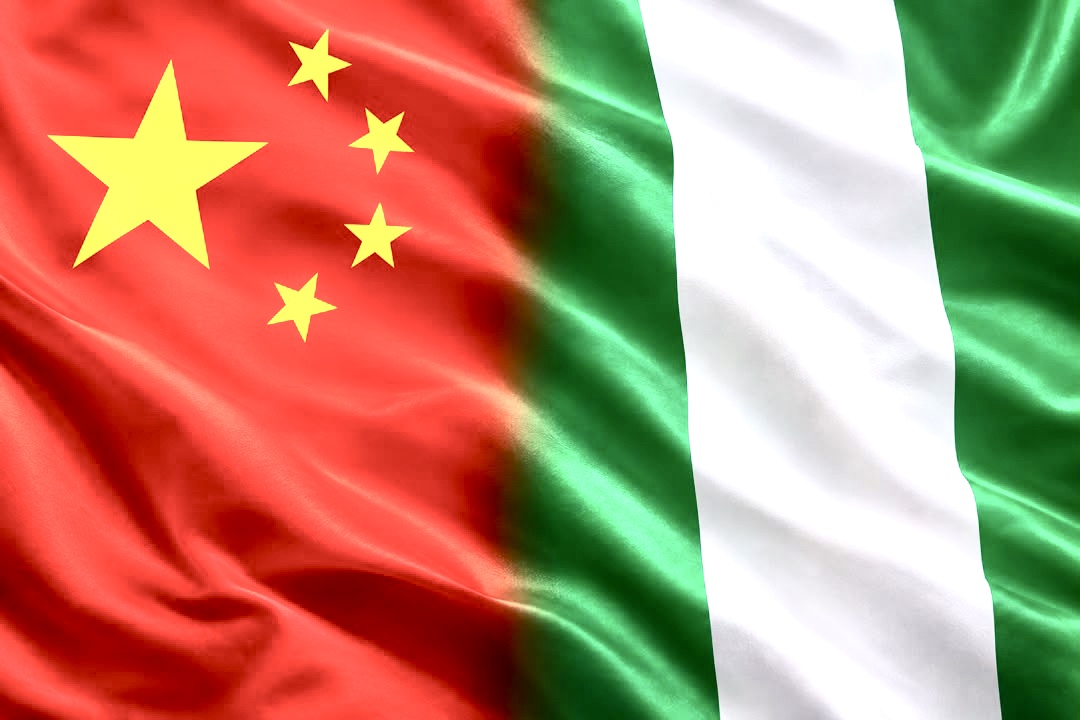
China’s decision to grant zero-tariff access to products from 53 African countries has been presented as a major opportunity for Nigeria to expand exports, attract investment and accelerate industrialisation.
The early figures are certainly impressive. Chinese imports from Nigeria reportedly rose by $2.3 billion in the first half of 2026, an 80 per cent increase, while bilateral trade reached $18 billion, representing a 35 per cent year-on-year increase.
But there is another side of the story that deserves equal attention.
What happened to Nigeria’s imports from China?
That question is important because Nigeria-China trade has historically been heavily skewed in China’s favour. In 2025, Nigeria exported about N2.78 trillion worth of goods to China but imported approximately N19.79 trillion, leaving a trade deficit of about N17 trillion.
Against that background, celebrating the 80 per cent increase in exports without examining the corresponding growth in imports risks presenting only half of the picture.
China’s zero-tariff policy could create a genuine opportunity for Nigerian exporters. But it could also deepen Nigeria’s dependence on Chinese manufactured goods if the country does not simultaneously strengthen domestic production.
That is the real issue.
The Chinese Ambassador to Nigeria, Yu Dunhai, speaking at an international seminar recently in Abuja, said the zero-tariff policy, which took effect on May 1, had already generated significant savings for Nigerian exporters of products including sesame, cattle bone granules and liquefied propane.
He cited savings of about $11,000 on every 100 tonnes of sesame, nearly $450,000 on Nigeria’s annual export of 7,000 tonnes of cattle bone granules and about $300,000 on a single 23,000-tonne shipment of liquefied propane.
These are meaningful gains. Lowering the cost of entering the Chinese market can certainly improve the competitiveness of Nigerian exports.
But removing tariffs at the Chinese border does not solve the much larger problems confronting Nigerian producers at home.
It does not provide reliable electricity, affordable credit, efficient transport, adequate storage, modern processing facilities or predictable regulation. Neither does it automatically enable Nigerian businesses to meet Chinese quality, sanitary and certification requirements.
That is where the enthusiasm over zero tariffs needs to be tempered with realism.
The unequal competition
China built its economic strength around manufacturing, industrial clusters, infrastructure, technology, logistics and a huge domestic market. Its manufacturers operate within an ecosystem where production, financing, distribution and export infrastructure are closely integrated.
Nigeria, meanwhile, is struggling with high energy and transport costs, foreign-exchange volatility, multiple taxes and levies, expensive credit, inadequate infrastructure and weakened consumer purchasing power.
The Nigerian manufacturer is therefore attempting to enter the Chinese market from a position of structural disadvantage, while Chinese manufacturers are competing aggressively for the Nigerian market.
This is not a new development. Nigeria’s textile and footwear industries remain one of the clearest examples of how domestic production can be weakened by a combination of structural problems, smuggling and cheap imported Chinese products.
The concern is that the same pattern is spreading to other sectors.
China itself has been dealing with industrial overcapacity and intense domestic competition. As Chinese manufacturers search for markets abroad, Nigeria —with its large population, growing consumer demand and relatively weak manufacturing base—naturally becomes an attractive destination.
Nigeria, with one of Africa’s largest consumer markets, is particularly important.
China’s strategy goes beyond tariffs
China’s commercial presence in Nigeria also extends beyond the shipment of finished goods.
Chinese companies participate in manufacturing, construction, telecommunications, infrastructure, wholesale and retail distribution and other sectors. Increasingly sophisticated payment and financial arrangements are also making trade with China easier.
There is nothing inherently wrong with this. Foreign investment, technology and easier trade can contribute significantly to Nigeria’s development. The concern arises when Nigeria becomes primarily a market for Chinese production rather than a competitive participant in the value chains connecting the two countries.
China is offering Nigeria access to its consumers. Nigeria must ensure that it has competitive products to sell to them.
More exports—or better exports?
The Minister of State for Agriculture and Food Security, Aliyu Abdullahi, captured the challenge when he asked whether Nigeria could “export better”, rather than merely export more.
That should be the centrepiece of Nigeria’s response.
Nigeria should not be satisfied with exporting larger quantities of raw sesame, cashew, cocoa, cassava, soybean, rubber or other commodities. It should be asking how much of these products can be processed locally before they leave the country. The real prize is value addition.
A Nigerian exporter of raw sesame earns from the commodity. A Nigerian processor producing sesame oil, food ingredients and other derivatives captures a larger share of the value chain, creates jobs and stimulates industrial demand.
The same principle applies to agricultural commodities, solid minerals and other natural resources.
China’s zero-tariff policy therefore becomes meaningful only if Nigeria possesses the factories, infrastructure, logistics, standards and supply chains required to exploit it.
The Chinese subsidy question
There is also a more uncomfortable issue Nigeria cannot ignore: the competitive advantage enjoyed by Chinese manufacturers through the country’s broader industrial policy.
China has spent decades supporting manufacturing, infrastructure, research, exports and strategic industries. Its enormous industrial scale alone allows many Chinese producers to achieve costs that Nigerian manufacturers may not match.
Beijing has also used tax incentives, export rebates and other industrial-support measures, although some of these policies have been adjusted in recent years as Chinese authorities respond to concerns over excess capacity and destructive price competition.
For Nigeria, the implication is straightforward.
It is difficult to demand that a Nigerian factory compete on equal terms with a Chinese factory when the two operate in radically different economic environments.
The answer, however, is not to shut Nigeria’s borders.
Nigeria must defend fair competition
Nigeria should welcome competition, but competition must be fair.
Where there is evidence of dumping, subsidisation or serious injury to domestic industries, the government must be prepared to use legitimate trade-remedy measures.
Blanket protectionism would be counterproductive. Nigerian consumers also benefit from competitive prices and access to affordable products.
But it is equally dangerous to expect local manufacturers to compete against foreign production supported by far stronger industrial ecosystems while they contend with Nigeria’s high operating costs.
A zero-tariff arrangement with China should not become a one-way street in which Nigeria opens its market while failing to build and defend its productive base.
The harsh Nigerian environment
The timing makes this particularly important.
The Chinese government knows that Nigerian businesses are operating in a difficult economic environment. Energy, logistics, financing and production costs remain major constraints, while inflation has reduced household purchasing power.
A local manufacturer facing these pressures can easily be priced out by cheaper imports.
The immediate result may be lower prices for consumers. The longer-term consequences could include factory closures, job losses, weakened domestic supply chains and greater dependence on imports.
That is why the success of the China arrangement should not be measured simply by the volume of Nigerian exports.
The more important questions are: How much value is being added in Nigeria? How many jobs are being created? How many Nigerian companies are entering Chinese supply chains? How much technology is being transferred? And, crucially, is Nigeria’s trade deficit with China narrowing or widening?
These are better indicators of structural transformation.
Turning market access into industrial power
China has opened a door to one of the world’s largest consumer markets. Nigeria should take the opportunity seriously—but strategically.
Government needs to identify products with strong Chinese demand and build competitive value chains around them. Export processing zones should be connected to reliable power, transport networks and ports. Quality-control and certification facilities need strengthening. Access to long-term industrial finance must improve, while logistics and customs procedures should become faster and more predictable.
AfCFTA should also form part of the strategy.
Nigeria could use continental supply chains to aggregate African raw materials, process them locally and export higher-value products to China. That would be a significant departure from the traditional model of shipping African commodities to China and importing finished products in return.
There is an irony at the heart of the zero-tariff arrangement: it can help Nigeria export more while simultaneously making it easier for Nigeria to import more.
Its ultimate impact will therefore depend less on what China has offered and more on what Nigeria does with the opportunity.
The reported $2.3 billion increase in Nigerian exports to China is welcome. But it should not obscure the larger trade picture.
Nigeria’s challenge is to ensure that what passes through that door is increasingly made in Nigeria—not simply dug from Nigerian soil, harvested from Nigerian farms and shipped out as raw material.
Otherwise, the country risks expanding the old pattern under a new trade arrangement: Nigeria supplies the resources; China supplies the products.
That would be increased trade, certainly—but not necessarily economic transformation.