Business and Maritime West Africa Editorial
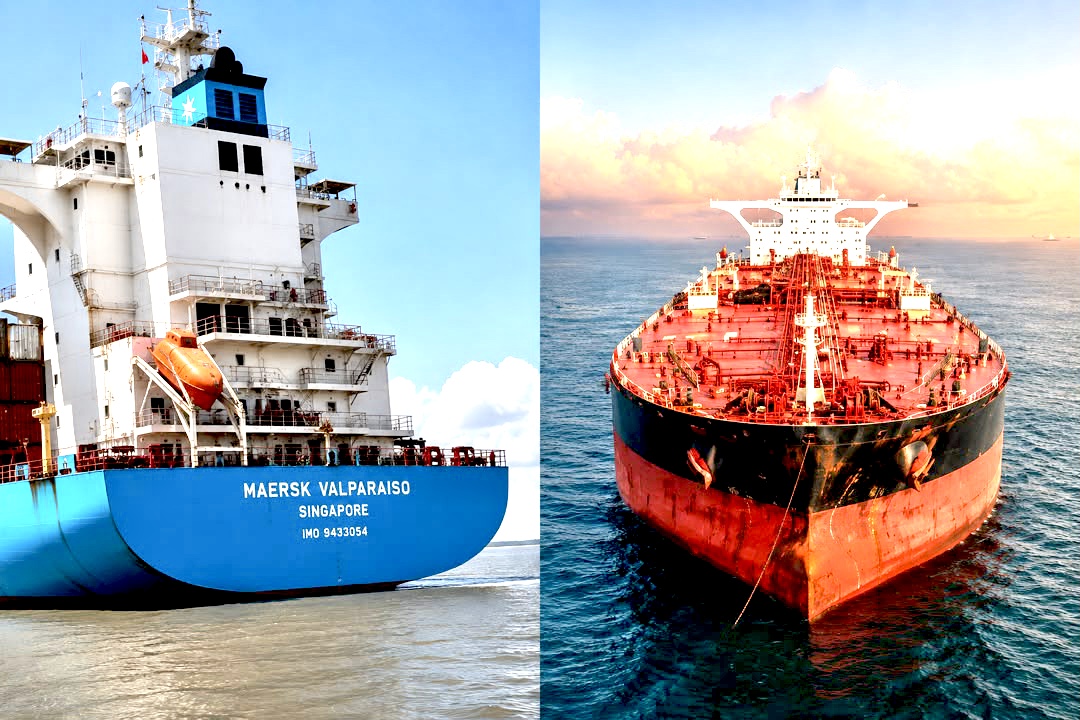
The collision between the Singapore-flagged container vessel MV Maersk Valparaiso and the Nigerian-flagged oil products tanker MT Lady Martina in the Bonny Inner Anchorage on May 20, 2026, was more than another maritime accident. It was a test of Nigeria’s capacity to respond swiftly to a serious marine casualty, protect coastal communities and the marine environment, and demonstrate that its regulatory institutions can meet international maritime standards.
Three months later, however, questions are being raised over what has happened since the initial emergency response.
NIMASA reacted promptly when the accident occurred. Its Deep Blue Forward Operating Base in Bonny received the distress call at about 11:30 a.m. and deployed personnel to the scene. Five crew members aboard MT Lady Martina were injured and evacuated for medical attention. NIMASA also established a Situation Monitoring Room and ordered an investigation.
But the initial response is only one part of the story. The more difficult question is what happened afterwards.
The prolonged environmental uncertainty:
The collision which disabled both vessels, also resulted in an oil spill. MT Lady Martina drifted ashore and became grounded along the Bonny Channel, while MV Maersk Valparaiso was initially grounded at the Bonny Inner Anchorage pending assessment and investigation. Subsequent reports indicated that the container vessel was eventually refloated and moved to the Inner Bonny Anchorage.
The incident was subsequently classified by the Nigerian Safety Investigation Bureau (NSIB) as a Very Serious Marine Casualty. The classification is significant. Under the IMO Casualty Investigation Code, very serious marine casualties require a marine safety investigation, with the objective of establishing the causes and circumstances and generating safety lessons to prevent recurrence.
NSIB says it did not ignore the accident. Its investigation team was deployed to Onne and Bonny on May 22, just two days after the collision. Investigators boarded both vessels, interviewed masters and crew members and secured operational and navigational records. The Bureau also retrieved Voyage Data Recorder and Electronic Chart Display and Information System data from MV Maersk Valparaiso for forensic analysis. Singapore’s Transport Safety Investigation Bureau was notified as a substantially interested state because of the Singapore flag.
This distinction is important because NIMASA and NSIB have different responsibilities. NIMASA is the maritime regulator responsible for safety, security, pollution prevention and enforcement within its mandate, while NSIB conducts independent safety investigations into transport accidents. A safety investigation is not primarily a criminal prosecution or civil liability exercise; its purpose is to identify causal and contributory factors and prevent recurrence.
That, however, does not answer the communities’ most immediate question: what is being done about the pollution and their livelihoods?
That question has become more serious following a petition by the Torukongo Community Union to the International Maritime Organization (IMO).
In a petition dated August 6, 2026 and addressed to IMO Secretary-General Arsenio Dominguez, the community alleged that the collision polluted Ogu Creek and affected fishermen, women and other residents whose livelihoods depend on the marine environment.
The community complained of damage to mangroves, fish ponds and fishing equipment, as well as loss of income. It accused the authorities and the companies involved of failing to provide what it considers an adequate clean-up and compensation response.
The petition is particularly embarrassing because the community says it had previously raised the matter with Nigerian authorities and the companies involved before deciding to seek international intervention.
Whether every allegation in the petition is ultimately established is a matter for investigation. But the fact that a community affected by a maritime accident on Nigerian waters now believes it must appeal to the IMO is itself a warning signal.
The implication of dragging Nigeria authorities to international bodies:
Nigeria must be careful not to confuse a legitimate, evidence-based investigation with administrative silence.
There is nothing unusual about a complex marine casualty investigation taking time. Investigators have to examine bridge communications, VDR data, electronic charts, vessel movements, pilotage, weather and navigational conditions, crew actions, vessel condition and other evidence. In this case, the participation of Singapore’s safety investigation authority also underscores the international dimension of the investigation.
But investigation and environmental response are not necessarily the same thing.
A community should not have to wait for a final accident report before seeing appropriate action to contain pollution, assess environmental damage, protect public health and determine how affected livelihoods will be addressed. Where there are credible reports of continuing pollution, the response should be visible, coordinated and transparent.
Indeed, NIMASA’s own published mandate recognises severe environmental damage or the potential for such damage as falling within the definition of a marine casualty and identifies pollution prevention and marine casualty investigation among its responsibilities.
This raises a fundamental question for the Federal Ministry of Marine and Blue Economy and the agencies involved: Has the accident been treated as an isolated collision to be investigated, or as a continuing environmental and navigational emergency requiring sustained intervention?
The international dimension is a reputational problem for the country and perhaps, the most troubling aspect of the episode.
Nigeria is not an outsider at the IMO. It was elected to the IMO Council for the 2026–2027 biennium in Category C, alongside other states with special interests in maritime transport and navigation.
It would therefore be inaccurate to describe the current issue as threatening Nigeria’s “retention” of a seat it is already holding for the 2026–2027 biennium. The more precise concern is that an unresolved marine casualty and allegations of inadequate environmental response could damage Nigeria’s credibility and influence in future IMO elections and maritime diplomacy.
The IMO’s role is not to act as a court ordering the arrest of vessels or determining civil liability. Its casualty-investigation framework is principally concerned with maritime safety, environmental protection, lessons learned and prevention of future casualties.
Consequently, the community’s call for the “arrest and prosecution” of the vessels and withdrawal of company memberships should be understood as a petitioner’s demand, not as something the IMO ordinarily determines simply because a casualty has occurred.
Nevertheless, the internationalisation of the complaint is significant.
The danger of Bonny Channel’s prolonged environmental uncertainty:
The Bonny Channel is one of Nigeria’s most important maritime corridors, linking major oil and gas and port operations with the Gulf of Guinea. Any vessel casualty that leaves wreckage, grounded ships or other obstructions in or around such a corridor has implications beyond the immediate location of the accident.
It can affect vessel scheduling, navigation, port operations, insurance, salvage arrangements and the confidence of international operators.
For a country already concerned about the cost of shipping and the competitiveness of its ports, Nigeria can ill afford a perception that major maritime casualties are followed by prolonged uncertainty.
There is also a broader environmental issue. Oil pollution in a creek-based fishing economy is not simply a clean-up problem. It can affect fishing grounds, mangroves, aquatic life, food sources and household incomes. The longer remediation is delayed, the greater the possibility that a relatively contained pollution event develops into a wider socioeconomic problem.
The way forward:
First, NIMASA and NSIB should provide a clear public status update on the investigations, explaining what stage they have reached, what evidence has been examined and what remains outstanding, without compromising the integrity of the investigation.
Second, the responsible environmental authorities should provide an independently verifiable assessment of the pollution and the status of any containment, clean-up and remediation exercise.
Third, the affected communities should be formally engaged. They need to know who is responsible for the clean-up, how environmental damage is being assessed, how legitimate claims will be documented and what mechanism exists for addressing verified livelihood losses.
Fourth, the authorities should clarify the status of MT Lady Martina, particularly its grounding, salvage and removal arrangements, if it remains a navigational or environmental concern.
Finally, Nigeria should use the incident as an opportunity to examine the safety of the Bonny Channel and its approaches. The investigation should not end with identifying who was responsible for the collision. It should ask whether pilotage, traffic management, anchorage arrangements, vessel movements, navigational aids and emergency response procedures need strengthening.
The central issue is therefore not whether NIMASA responded on May 20. It did.
The issue is whether the response has remained sufficiently visible, coordinated and effective in the months that followed.
NSIB’s early actions demonstrate that the investigative machinery was activated. What appears to be missing, at least from the public domain, is a similarly clear narrative on environmental remediation, community engagement, accountability and the ultimate disposition of the vessels.
That gap creates a vacuum. And when government leaves a vacuum, affected communities inevitably fill it with their own narrative. The Torukongo petition has now carried that narrative beyond Nigeria’s shores.
For NIMASA, the Ministry of Marine and Blue Economy and the Federal Government, this should be treated less as an embarrassment to be managed and more as an opportunity to demonstrate institutional maturity. Nigeria’s maritime reputation will not be protected by denying problems; it will be protected by showing that when something goes wrong on Nigerian waters, the country knows how to investigate it, contain the damage, protect its people, clean up the environment and transparently learn from the failure.
For a country seeking stronger influence at the IMO and seeking to attract more international shipping and investment to its ports, that is not an optional standard.
It is the minimum expected of a serious maritime nation